
Word · 3 pages
Research proposal
Scope the decision, method, sample, deliverables, and fee.
Download proposalRun AI-moderated interviews on your approved guide with your sample or our 4M+ vetted panel, then turn recordings and source-linked findings into your recommendation.

Walk me through the last time you made this choice. What tipped it?
The deciding reason surfaced four follow-ups deep, not in the first answer.
Trusted by teams at






Agency market research is the primary research an insights agency designs, fields and defends for its clients. User Intuition is an AI-moderated interview platform that gives research teams and agencies the depth of a senior researcher at the scale of a survey, with vetted respondents, their own methodology and evidence they can trace to the verbatim. Its AI moderator runs 20–30 minute interviews on your approved guide, ladders 5–7 levels deep and links every finding to its recording. User Intuition voice interviews cost $30 per quality interview with your sample or $60 with standard panel recruitment, with no monthly fee; specialty audiences are quoted separately. Bring the client's list or your own panel provider, or recruit from User Intuition's 4M+ vetted panel across 58 countries. Each client gets an isolated workspace, and unreleased stimulus stays confidential. Only interviews that pass length, depth and coverage checks are billed, so a fixed-fee project pays for evidence the client can review. Your researchers set client fees and own the recommendation.
Agency market research with User Intuition adds AI-moderated qualitative fieldwork to your client delivery: 20–30 minute interviews on your approved guide that ladder 5–7 levels deep, with 200+ panel interviews in 24 hours. Bring the client's list, your own panel provider or respondents straight from your survey, where interviews run in parallel as participants respond, or recruit from a 4M+ vetted panel across 58 countries. Specialist audiences such as clinicians and executives are recruited to order, with timing that follows incidence. The AI runs the interviews; your researchers keep the methodology, review the source evidence and own the client recommendation.
Research and insights agencies delivering client briefs for CPG, pharma and healthcare, tech and retail clients, and in-house research teams that run studies for internal clients the same way.
Load your approved guide, stimulus and study rules. Required questions stay pinned in order, the AI moderator interviews your audience in voice, video or chat, and every finding links back to the recording your team reviews.
Themes with verbatims, segment reads, an editable presentation, and every transcript, recording and screener answer, ready to export.
Client briefs keep growing while moderation, recruiting handoffs and first-pass analysis compete for the hours your researchers need for judgment, and any added capacity has to keep your methodology, your sample and your name on the work. Here's what agency researchers tell us, and how User Intuition closes each gap.
We have more client briefs than moderators. Every new project feels like a new hire.
20–30 minute AI-moderated interviews run in parallel on your approved guide, with 5–7 level laddering and 200+ panel interviews in 24 hours. The moderator works around the clock in every time zone, so studies keep filling while your team sleeps. Your senior researchers keep control of methodology and interpretation while the fieldwork layer expands.
Clients pay for our designs, down to stimulus rotation and quotas. If a platform can't run them as written, it's out.
Pin required questions in order and lock their wording verbatim, and write study rules for what the moderator must never ask or claim. Load images, video, prototypes or shelf stimulus at setup, run a parallel cell for each stimulus order (A then B, B then A), set hard quotas and screeners, and decide how far the moderator probes, 5–7 levels deep by default.
Our panel partners and survey platform are already set up. I'm not rebuilding the stack for one more tool.
Connect Prolific, Cint / Lucid or CloudResearch, bring any other provider through a custom link, send respondents straight from your own survey, or upload the client's customer list. Our 4M+ vetted panel across 58 countries is an option, never a requirement. Every transcript and screener answer exports to CSV, with the recordings alongside, so your own coding and AI tools pick up where the interviews end.
Transcript coding and first-pass analysis eat the hours we should spend advising the client.
Themes, verbatims and an editable presentation arrive with every transcript and recording, each finding linked to its source, so billable hours go to the insight narrative and the recommendation. Multi-market studies return translated verbatims beside the original. Inspect a sample study and presentation before using it for client work.
Clients won't let unreleased work or their customer lists sit in a shared vendor account.
Each client's guides, stimulus, recordings, transcripts and findings live in their own workspace, invisible from any other, and only the people you invite can see them. Unreleased stimulus stays confidential. Your agency owns the brief, the interpretation, client pricing and the relationship.
We quote fixed fees. When completes come back thin or fraudulent, we eat the cost.
Every interview is scored on length, depth and coverage, and you pay only for those that pass. A person listens to every panelist's interviews before they're accepted onto the panel, panelists are verified at signup and tracked across studies, and every session is screened for AI-generated or coached answers, so the project budget goes to interviews you can put in front of the client.
Keep the work clients hire you for. Add depth-interview capacity and first-pass analysis without handing over your methodology or client relationship.
Package the engagement around the client decision. Use the same research platform for a first project, a qualitative follow-up, or an ongoing program.
Take one brief from approved guide to depth interviews, reviewed findings, and a client recommendation. Agree the audience, evidence standard, and fieldwork scope before launch.
Investigate the reasons behind survey patterns, outliers, or segment differences. Keep the client's existing sample relationships and use conversations to explain what the numbers leave unanswered.
Combine recurring studies, mid-study improvement suggestions, and best-next-study recommendations. Your researchers interpret what changed and agree the next research action with the client at each review.
Translate the brief into a study and review the discussion guide. Your researchers set the objectives and the standard for evidence.
Bring a client list, connect a supported panel, or use User Intuition recruitment. Run AI-moderated interviews without scheduling every conversation manually.
Review recordings, transcripts, and source-linked findings. Apply your interpretation and turn the evidence into the client recommendation, starting from an editable presentation and report.
Use recurring studies and next-study recommendations to build an ongoing program. Review contradictions and unanswered questions; keep each client's evidence within the appropriate permissions and research scope.
Run more depth interviews in parallel while your researchers retain the brief, methodology, interpretation, and client narrative. The AI moderator applies 5-7 levels of laddering consistently across every conversation.
Follow a survey wave with adaptive interviews that investigate the patterns, outliers, and segment differences the questionnaire surfaced. Findings link back to full verbatims rather than stopping at a percentage.
Use a client list or supported third-party panel to run adaptive interviews with the audience the engagement requires.
Set up recurring studies, review mid-study improvement suggestions, and assess the recommended next study. Your team distinguishes tracking from discovery and interprets what changed for the client's decision.
Generate synthetic respondents from research you are authorized to use, then run studies to refine questions or narrow concepts. Validate consequential conclusions with real people.
Interview actual shoppers about purchase journeys and motivations. Use follow-up questions to investigate context, then review the evidence for your client’s retail decision.
User Intuition is an AI-moderated interview platform that gives research teams and agencies the depth of a senior researcher at the scale of a survey, with vetted respondents, your own methodology and evidence you can trace to the verbatim. Quality is built in: a person vets every panelist by hand, every session is screened for fraud, and you pay only for interviews that pass.
The moderator ladders 5–7 levels deep by default, using Reynolds and Gutman's laddering method, so you hear the reasons behind the reasons.
Bring your discussion guide and frameworks. Required questions stay pinned in order, word for word if you need it, study rules keep the moderator inside your compliance lines, screeners and hard quotas fill every cell to plan, and you decide how far it probes.
Click any theme through to the verbatim, the transcript and the recording. Every claim in the deliverable traces to what a participant said.
A 4M+ vetted panel across 58 countries: a person listens to every panelist's interviews before they're accepted, then every session is screened for AI-generated or coached answers and panelists are tracked across studies. Or bring your own: customer lists, your panel provider, or respondents straight from your survey.
Themes, verbatims and an editable presentation for every study, plus every transcript, recording and screener answer to export into your own tools. Put your own brand on them when you need to.
200+ panel interviews in 24 hours, with no cap on parallel conversations. Each one is scored on length, depth and coverage, and you pay only for those that pass.
| Dimension | User Intuition | Panel sourcing | Human-moderated fieldwork | In-house research |
|---|---|---|---|---|
| Primary role | AI-moderated interviews and first-pass analysis | Find eligible participants | Conduct researcher-led conversations | Own the full research process |
| Sample source | Your list, supported panels, or User Intuition recruitment | Provider audience and targeting | Arrange with the fieldwork team | Internal lists or external recruitment |
| Moderation | Adaptive AI follow-up questions | None; the panel supplies respondents, not interviews | Human judgment during the conversation | Your researchers moderate each session |
| Capacity | Parallel interviews; researchers review the evidence | Bounded by audience incidence | One moderator per live session | Bounded by researcher headcount |
| Analysis | Findings linked to participant verbatims | Raw completes; analysis happens elsewhere | Researcher-led synthesis | Team-defined synthesis and review |
| Recurring work | Recurring studies, mid-study suggestions, and next-study recommendations | Recruitment for each agreed wave | Plan moderator time for each wave | Plan team time and repeatable processes |
| Cost structure | Per quality interview: $30 with your sample, $60 with standard panel recruitment | Sample fees and incentives | Fieldwork, recruitment, and analysis scope | Staff time, tools, and recruitment |
| Agency role | Brief, evidence review, interpretation, client advice | Research design and downstream delivery | Brief, synthesis, and client relationship | Research design through client delivery |
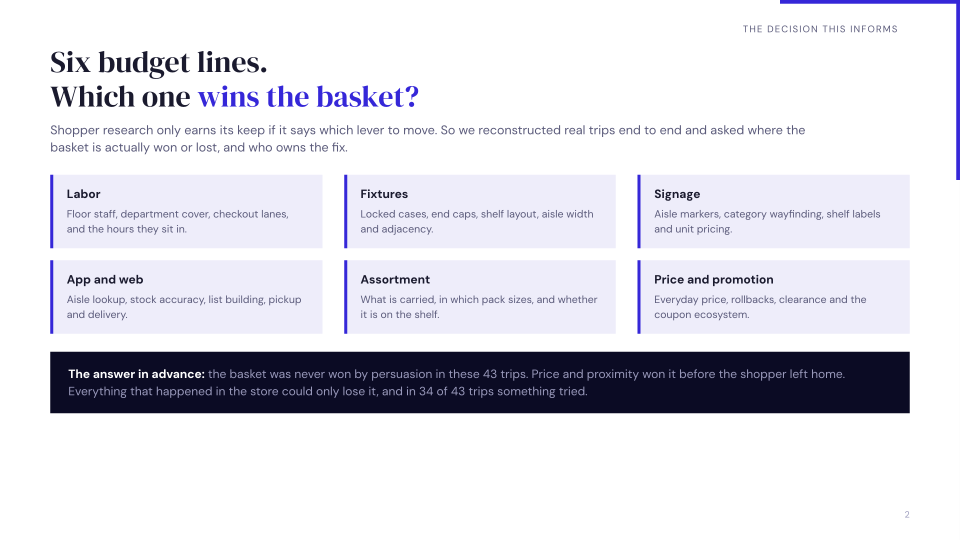
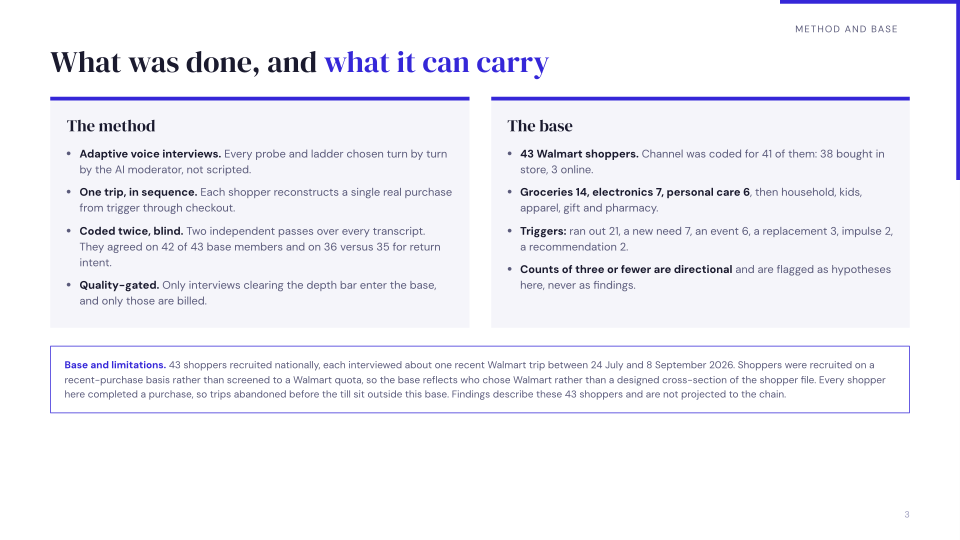
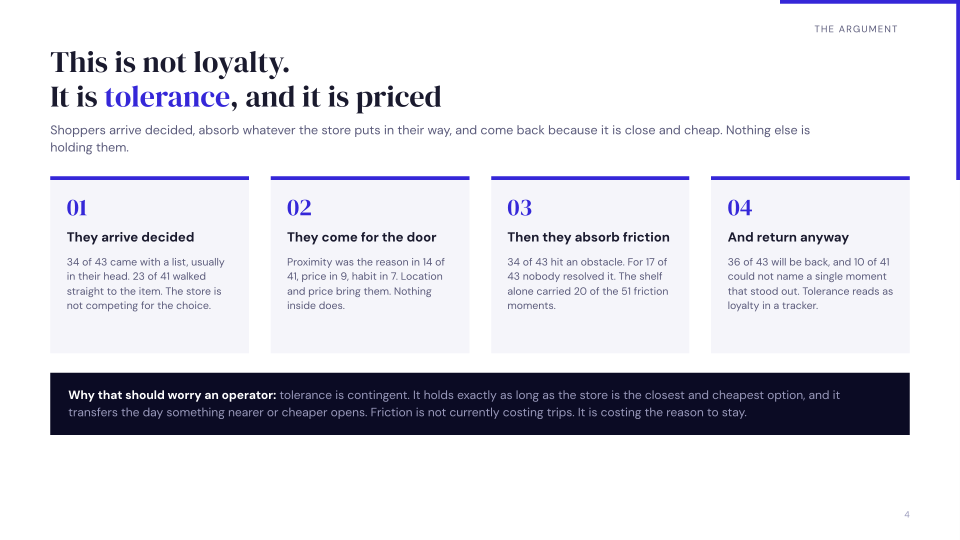
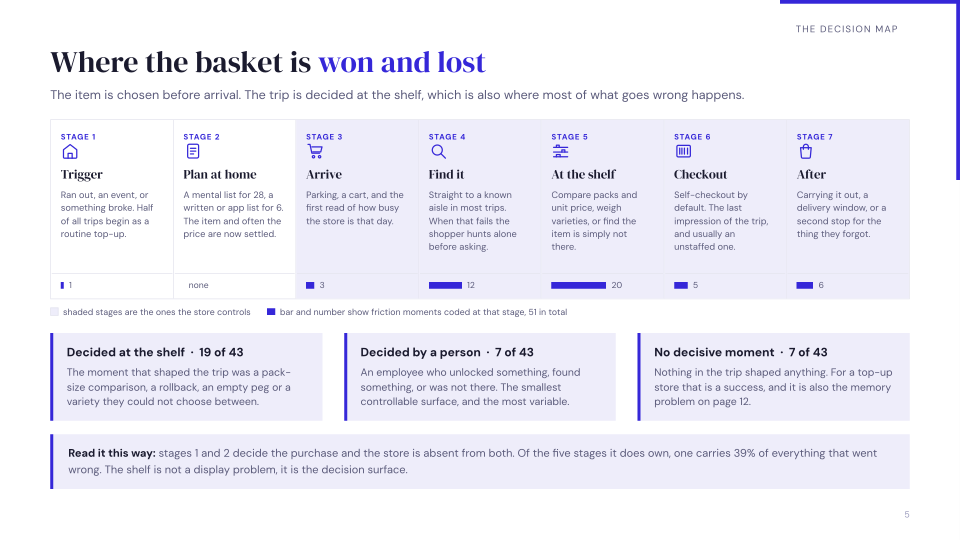
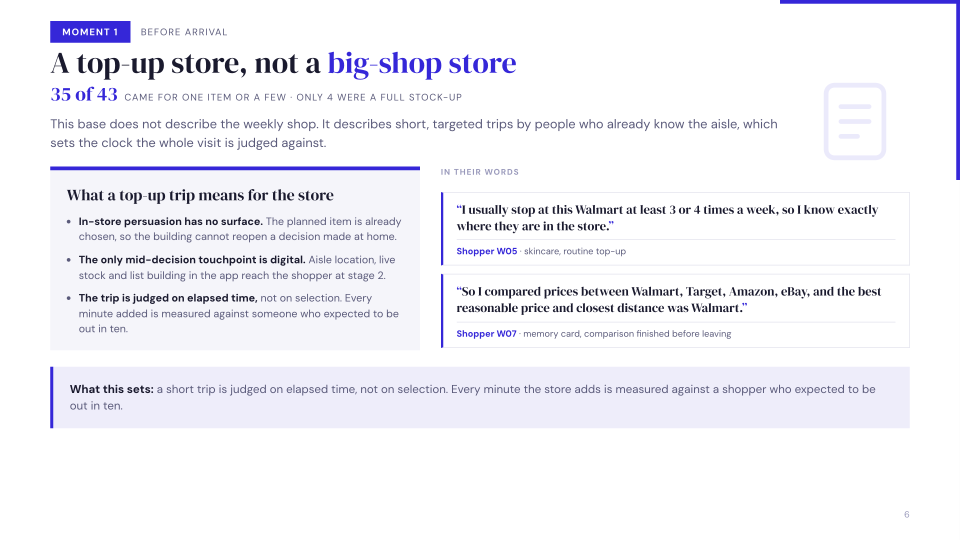
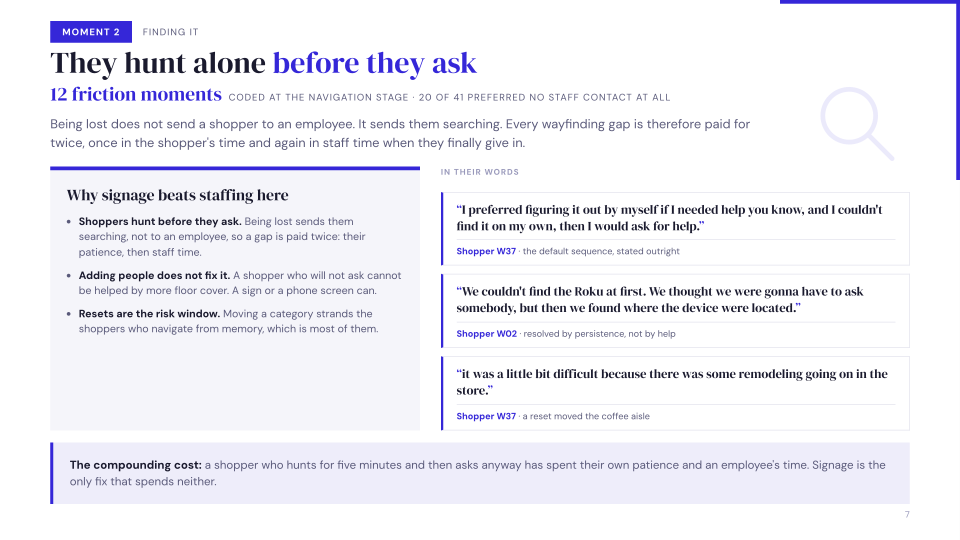
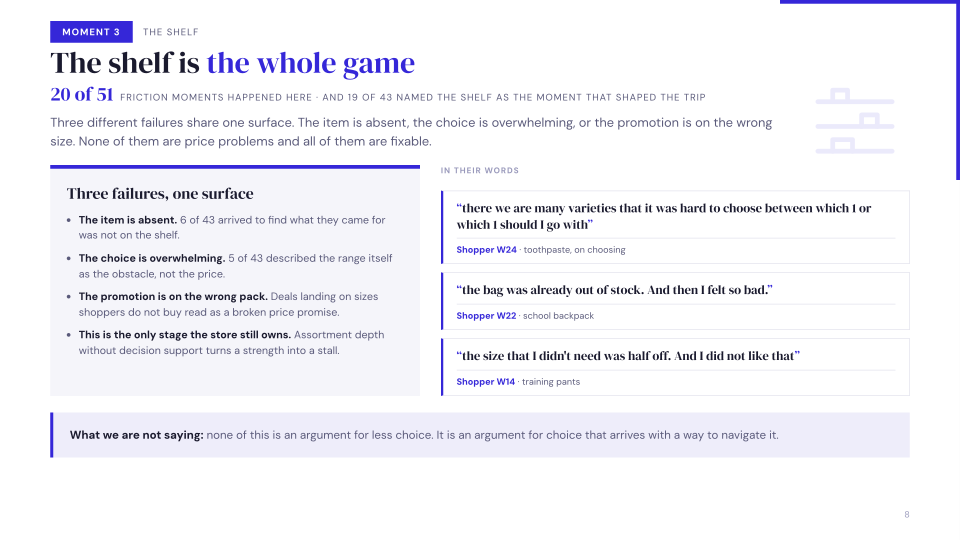
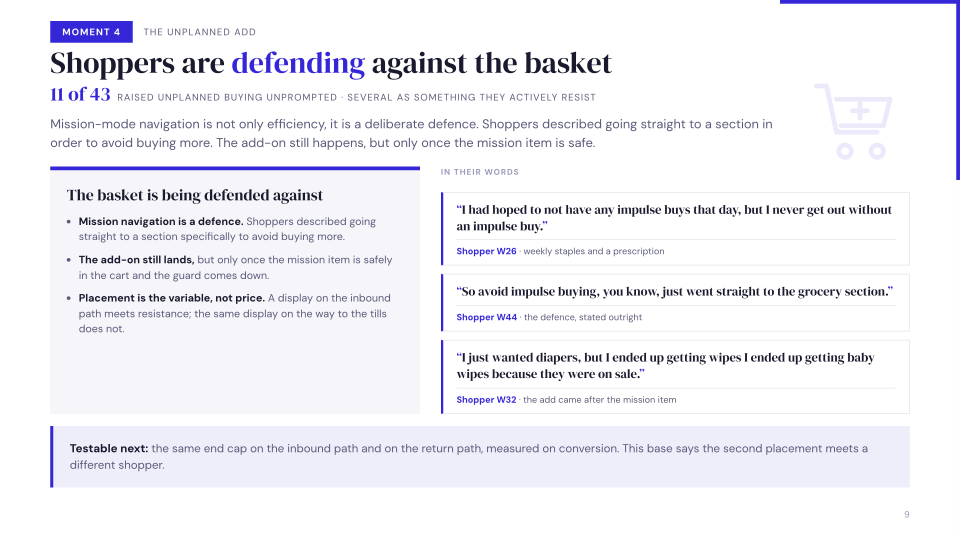
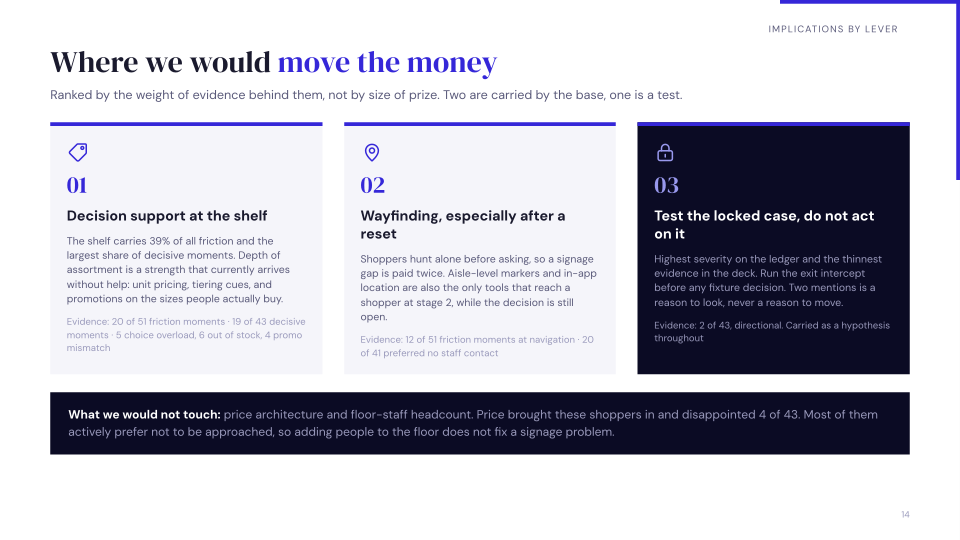
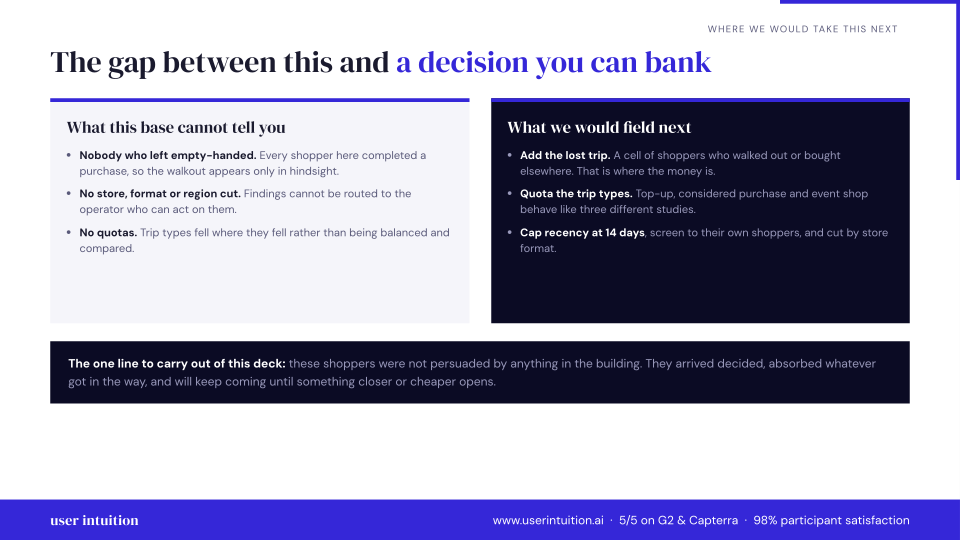
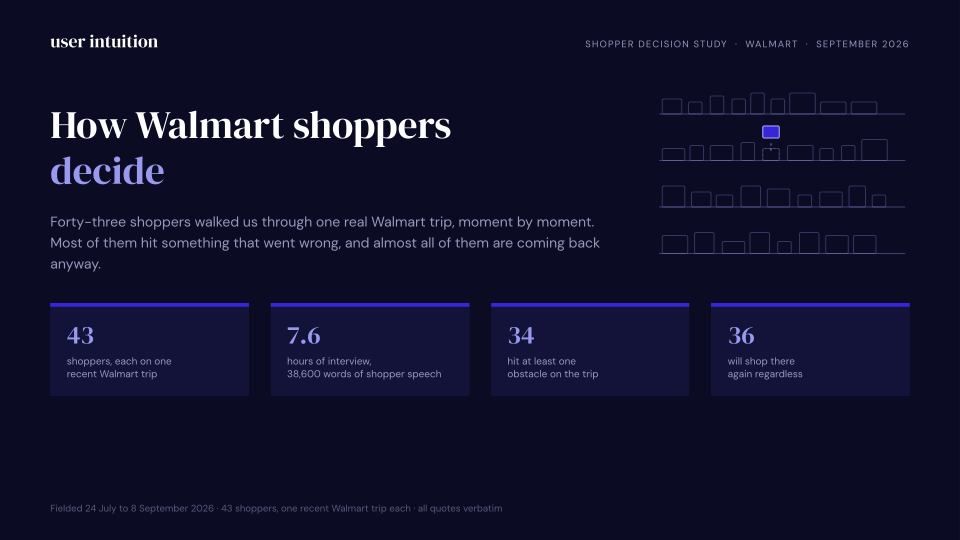
Explore calls and a sample presentation from our 43-participant Walmart shopper study.
“Basically, because we use those things all a lot We try to always have you know, certain things in the house at all times because we use them very frequently. So we don't like to run out of them.”
Hi. I'm Elliot. Your AI moderator. I'm here to learn. No wrong answers, so don't overthink it. The more detail you share, the better. So how are you doing today?
Good. How are you?
I'm doing well. Thanks for asking. So So recently, you bought something in person at a store. I don't have the store name or what you bought just yet. Could you tell me what you picked up most recently and where?
It was at Walmart. And I just purchased mainly just groceries
Got it. Thanks. So you were at Walmart within the past 30 days and picked up groceries. What made you go grocery shopping that day?
Pretty much just little things that we needed.
Walk me through how this grocery trip came about. Where did it start for you?
When I basically went into my kitchen to make my husband something quick to eat for lunch and noticed that we were out of a couple condiments and we were out of cheese for sandwiches and, uh, you know, little things like that. So I started making a little list and that's basically what made me realize that I needed to do a little quick shopping trip.
That makes sense. When you started making that list, what were you hoping to end up with by the time you got back from Walmart?
I was hoping that I was gonna come back with exactly what I needed and maybe a couple other things due to looking through any coupons that I could get my hands on, or any savings or promotional items that they had going on at store I was going to.
What was making you want those specific things right then? Beyond just being out? Was it about being able to make certain meals or something else?
Basically, because we use those things all a lot We try to always have you know, certain things in the house at all times because we use them very frequently. So we don't like to run out of them.
Why Walmart for this trip and not another grocery store? What made it the right choice for you that day?
On Walmart, is basic to us, it's just kinda quicker and it it has everything that we need plus more. We do go to a couple other things or other places. We actually shop online a lot, but if we are going store anywhere, we usually do pick Walmart. Just simply because, like I just said, Walmart usually always has everything we need plus more. It's kind of like a 1 stop shop for us
Take me into your trip. What's the first thing you did when you got to Walmart?
The first thing that I did when I got to Walmart was I made sure that I had my shopping list in hand And then I grabbed a shopping cart because I knew I was going to need it. I always end up grabbing end up walking out with more than I can getting. But I always start with going on 1 side of the store. And ending up on the other side. I like to kind of go aisle to aisle. I don't really shop sporadically throughout the store.
As you went aisle to aisle, what were you looking for along the way? Was it just the list, or were you keeping an eye out for anything else?
That's why I go aisle to aisle on Obviously, I always get what is on my list. I always I always keep an eye out for anything else that we could you know, need in the household or if I always look for sales and promotions mainly. But I always make sure that I have the list in my cart before I you know, choose anything else
How do you usually spot those sales or promotions while you're shopping? Is there something you look for, or do you wait for things to catch your eye?
I usually go online and look throughout I either look on the website first or I if they have a if they have a a coupon book I will grab that and I'll look I'll look through that as I'm browsing a store. I try not to rush That way I can actually see everything.
Did you end up dealing with anyone who works at Walmart during this trip, or were you on your own the whole time?
No. I was pretty much on my own. The whole time for this trip. I don't really like dealing with employees there. I like to kinda be on my own.
Was there a moment during this trip that stood out to you even if it was something small?
Not that I can really think of right this second.
No worries.
Just that it it it's always busy.
Got it. Was the busyness something that got in your way at all, or did it just feel like part of the usual Walmart experience?
Definitely just part of the Walmart experience. It's always like the Again, that's usually why we shop online a lot. But in certain circumstances, if we need it faster, we will go in store.
Of everything about that purchase, what mattered most to you?
Basically, the pricing the prices and getting it that day.
What was it about the pricing and getting it that day that made those things matter most to you?
All of the above. I mean, quality of the product and getting it I mean, getting it that day.
If you could change 1 thing about trip to Walmart, what would have made it better for you?
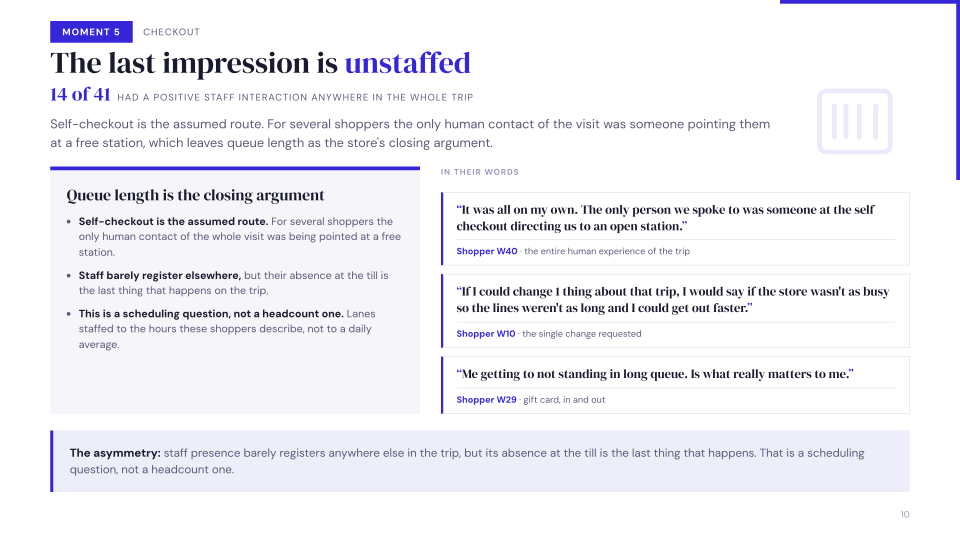
If I could change 1 thing about that trip, I would say if the store wasn't as busy so the lines weren't as long and I could get out faster.
Would you buy from Walmart again for groceries?
Yes. Definitely.
Would you tell a friend to buy their groceries at Walmart? If so, what would you say to them?
Yes. I would, but I would tell them to shop online.
What would make you recommend shopping online at Walmart instead of going in
How busy it was in store. And you get free delivery if you're a member.
Is there anything else about your grocery shopping trip or how you decide where to shop that you think I should know?
I like 1 1 stop shops. So, I mean, I mainly look at what I need and I compare pricing mostly. But mainly Walmart is a go to.
That's all I had for you today.
You for your time. You can hang up when you're ready.
“It made me feel so safe so relieved, and it brightened my day.”
Hi. I'm Elliot. Your AI moderator. I'm here to learn. No wrong answers, so don't overthink it. The more detail you share, the better. So how are you doing today?
I'm doing great. Thank you so much.
Glad to hear it. Let's jump in! So, within the past 30 days, you bought something in person at a store. I wanna make sure I've got this right. Can you tell me what you picked up and where you bought it?
I bought an an mobile phone at the Walmart shop.
Perfect. Thanks for clarifying. So you were at Walmart and picked up a mobile phone. What made you go looking for a new phone that day?
My old phone was broken, so I had difficulties to communicate and to chat on various social media platforms. So I decided to to get new phone.
Got it. So really started because your old phone broke and you needed to get back to communicating and using social media. Walk me through how it all began. What were you doing right before you decided to head out to Walmart for a new phone?
So I was in the kitchen preparing some meals. And usually, when I see new recipes online, I like to try them out, especially learning on YouTube So while I was watching the tutorials, online, and in the kitchen preparing something, the phone suddenly fell off and broke. And it frustrated me. So next thing, I looked at the nearest Walmart store, and decided decide to get a new phone immediately so that I can I could continue with my my my cooking?
That sounds like a pretty frustrating moment. Right when you needed your phone most. When you decided to go to Walmart, what were you hoping to end up with? It a specific phone in mind or just something that would get you back online quickly?
I was really hoping to to get a phone, a Google a Google phone So I finally got Google Pro 6 and which is very quite helpful because the features are amazing. The camera setting is great. The the volume is so loud, and wow, it just makes me so happy.
Sounds like you knew exactly what you want. A Google Pixel 6 Pro. What was it about that phone that made it the right choice for you, especially in that moment?
Yeah. Thank you. So the the the phone had a lot of features. I I heard friends were talking about this phone. So in terms of the camera setting, it can take pictures and refine them into good quality. It has its own internal scanner, like I don't need to download other apps to scan to do scans. And of course, it has high quality for recording, which has been helping me in my meetings. In the office. So it's really amazing, and I love festival the quality of the phone in terms of the camera, because the previous phone I had was a Samsung. And the quality was really frustrating. And it had it has a very good processor speed as well. It's very fast. It's very efficient, and I like it. I like it. I'm enjoying the features.
You mentioned your friends talked about it and the camera and speed were big draws. Especially since your old Samsung left you frustrated. Why did you choose Walmart for this purchase instead of another store or buying online? What pulled you there?
I choose war Walmart because it was approximate to my to my location. So I needed to to to get a new phone ASAP. I could access phones in other store but Walmart was nearest to me. And of course, Walmart is big. The The staff are are very nice. And they have excellent customer care service.
So speed and convenience were key, plus you trust the staff and the service at Walmart. Take me into the experience itself. When you walked in, what was the first thing you did?
When I walked into the shop, the first thing I I did was to try to seek for help. By by calling the attention of the staff who were in attendance, Mostly in other shops, I get frustrated because many staff sometimes they're standing and they are doing nothing and they are busy and they're snobbish. But the staffs were very nice, and they paid attention. And someone quickly rushed over to my aid, to direct me to the section where I could easily purchase a mobile phone. And that really made made my day because I was in the haste. I wanted to get a a new phone as soon as possible to get back to consume my tutorials. Online.
That sounds like a real relief. Especially since you were in a hurry. When the staff member helped you
Yeah.
what happened in that exchange that stood out to you?
When she helped me, she pointed me in the direction of where we have mobile phones and other accessories because they have several lanes, they have lanes for fresh food, for fast food, for household equipment, for TVs, and for computers, They just pointed me out to to the direction of or where I could get mobile phones. Otherwise, I would have spent more than 30 minutes wandering from 1 place to the other, and add in addition to this, I'm new to the area. So the experience really saved me time which was of the essence to me because I really wanted to get back to my cooking in the kitchen.
That makes a lot of sense. So having someone guide you right away, especially as someone new to the area, really made a difference. Was there a particular moment during your visit that stood out and shaped how you felt about the whole experience?
Let's start with very warm work welcoming, often nice words. And after the point in the direction where I needed to to to look at the mobile phones, the various samples. They pointed me, even gave me a recommendation for the Google Google Pro 6 and the other Google phones. So they didn't they were not just nice, but they took our time to give me different brands. They were patient. That really helps me. So I'm happy for this experience. And I think I'm going to go back to that shop to be able to purchase more equipment or more materials.
It sounds like their patience and willingness to walk you through options really mattered, especially since you were in a rush and new to the What did that leave you feeling in the moment?
It made me feel so safe so relieved, and it brightened my day. Because unlike my previous experience in different stores, which I beg for permission not to mention their names, I felt frustrated better And at the same time, since I'm a black person, I thought honestly, it was a race issue. But keeping my feelings aside, the experience I got from the Worldmart Show was completely different because I felt safe I felt happy, and it made my day because I was able to get back to my cooking in time. Which was something very wonderful.
Thank you for sharing that. Sounds like feeling safe, respected, and genuinely helped really shape your experience at Walmart. Especially compared to what you felt elsewhere. Of everything about that purchase, what mattered most to you?
The 1 thing that mattered most to me was their abilities with patients. To take me on a mini tour for the section where I had to buy the the mobile phone to take time to explain to me the different brands, and the accessories and the properties of each phone, And of course, showing me other lanes of things I could buy, like, oh, if you want to get a flat screen for your home, if you want to get, I mean, household equipment, it was It was like, I mean, a whole package I came there for a mobile phone, but they showed me several things and told me interesting things about quality of their products, And my overall experience is that this same manner that I was treated for buying the mobile phone the same treatment I'm gonna get if I go to buy other things at the store. So that leaves me extremely delighted.
That sounds like a great experience. If you could change 1 thing about that purchase or make it even better, what would it be?
If I could change 1 thing about that purchase, I will probably say they should be able to put up like, digital screens for the sections that has different goods, like mobile phones and accessories, smart TVs, fresh food, household kitchen utensils, I know just different sections for each type of product that they're selling, uh, with digital science on the alley on the alleyway. That works.
That's a really clear suggestion. Digital signs to help people find what they need faster. Would you buy from Walmart again after this experience?
Definitely, of course, I'm going to buy from Walmart. I think when when you've when you when you have money, and you get to a service and you feel respected, that that that that that that is a priceless and a rewarding feeling. So, yes, I'm going to buy from Walmart. The next time.
If a friend asked you about buying a phone from Walmart, what would you tell them?
But tell them that first, they are going to save a lot of time. The the the staff are very warm. Welcoming. And did not discriminate against your color no matter your nationality or your race. And I will tell them, that they will be able to get high quality products as well. Because it does not suffice for you to experience good customer care But I think the quality of the product you're going to purchase also matters. So it's a combination of quality of products plus quality of service.
Thank you for being so open and detailed. Is there anything about your experience at Walmart or buying your phone that we didn't talk about? But you think is important to mention.
Think, uh, they should
Take your time. What else
they should because okay. Thank you. Thank you for giving me the opportunity. I think they should open, like like, a program to help those who are in need like, a secondhand treats, like a secondhand shop where people who cannot afford high quality goods could can afford goods that that are of high quality but are of secondhand.
That's a thoughtful idea. Having a second hand section so more people can access good products at lower Thanks for sharing that. I really appreciate you walking me through your whole experience and all the details. That's everything I needed. Again for your time and openness. I hope the new phone keeps making your days brighter.
Thank you. I got it
That's all I had for you today. Thank you for your time. You can end the interview when you're ready.
Explore all 15 slides, from shopper evidence to recommendations.
$30 per quality voice interview
$60 per quality voice interview
Templates for agencies, consulting firms, and research teams using User Intuition. Adapt the scope, keep your methodology, and make the work clear to your client.
Word · 3 pages
Scope the decision, method, sample, deliverables, and fee.
Download proposalPowerPoint · 5 slides
Present the brief, research approach, evidence, and next step.
Download pitchExcel · 1 worksheet
Model recruitment, researcher time, contingency, and margin.
Download budget"We delivered a significantly better client deliverable in half the usual time. We can now take on more work, and our team is more than three times as productive based on the number of studies we can run at once."
"What surprised me was the moderator. In one pack study people kept saying a concept felt "more premium," and instead of logging that and moving on it kept asking what premium meant to them, until it came out that they meant the front wasn't cluttered, they could find the ingredients, and it looked like something they'd actually put in their cart. I'd normally only get that from a good human moderator."
Bring one live client brief. Run the study in the workspace, use your preferred sample, and decide where the platform fits your delivery process.
Discuss the audience, research objective, delivery format, and requirements for an ongoing program.
Walk through a real study — from interview to report. See exactly what the platform delivers before you commit.
Pay per quality interview · No monthly fee on Starter
Deep-dive guides covering this topic from strategy to execution.
Practical frameworks and platform-specific guides for teams ready to act.
Reference deep-dives on methodology, best practices, and applied research.
Side-by-side comparisons with competing platforms and approaches.
Complementary research use cases that pair with this topic.
The platform features that power this type of research.
Last updated