

The depth of a senior researcher.
The scale of a survey.
For agencies, consulting firms, and research teams. Keep your methodology, bring your sample or use our 4M+ vetted panel, and turn interviews into evidence-backed recommendations.
Start directly in the platform. No sales call required.
Used by 500+ research teams






Why does qualitative research need a different approach at scale?
Every team wants that depth. Almost none can get it at scale. You have more open questions this quarter than your fieldwork can answer, and each one needs the why, not a score. Every study means recruiting, scheduling and moderating one conversation at a time, so most questions get a survey or a guess instead.
“We can't run enough interviews to go deep”
My team can only moderate so many interviews in a week. When several briefs land at once, we cut the sample or cut the follow-up questions, and the depth the client or stakeholder is paying for is the first thing to go.
“I can't vouch for every respondent”
Panels are full of professional respondents, bots and people pasting answers from AI tools, and I can't listen to every one of them before the deck goes out. One bad respondent in a client or stakeholder deck costs more than the study did.
“When they ask where a theme came from, I need the quote”
When a client or stakeholder asks where a theme came from, I need the exact verbatim and the recording behind it, not a summary written the night before. If I can't show it, the finding gets challenged and the recommendation stalls.
“The answer arrives after the decision”
By the time fieldwork wraps and the deck is written, the campaign has launched and the roadmap has shipped. The findings get read, nodded at and filed somewhere no one will look.
What Is User Intuition?
User Intuition is an AI-moderated interview platform that gives research teams and agencies the depth of a senior researcher at the scale of a survey, with vetted respondents, their own methodology and evidence they can trace to the verbatim. Quality is built in: a person vets every panelist by hand, every session is screened for fraud, and you pay only for interviews that pass.
How does User Intuition fix each constraint?
Parallel AI moderation expands fieldwork capacity without cutting the follow-up questions. Panelists are vetted and every session is screened for fraud, every finding links to its verbatim and recording, and panel studies return 200+ interviews in 24 hours. Researchers keep control of the guide, evidence review, and final recommendation.
| Dimension | Surveys | User Intuition | Human-moderated qualitative |
|---|---|---|---|
| Depth | Structured answers with limited adaptive probing | 5–7 laddering levels, consistently | 5–7 in skilled hands; less in junior hands |
| What you learn | What people chose or reported | Why they chose it, in their own words | Why they chose it, in their own words |
| Consistency | Same questions; little adaptation | Adaptive probing with the same rigor every time | Adaptive probing that varies by moderator |
| Scale | Thousands of responses in parallel | Thousands of conversations in parallel | One moderator at a time |
| Speed | Hours to days, then analysis | 200+ panel interviews in 24 hours | 5–10 interviews per week |
| Cost | Lowest cost per response | $150 per 5-interview study | $15,000 per study |
How does User Intuition work?
Here is how a study runs: start with your question, review the guide, choose your sample, and inspect the findings. Keep control of the research while AI handles the interviews and first-pass analysis.
Upload your brief
Paste your brief or describe what you want to learn. The platform builds the discussion guide, screener, and timeline in five minutes.
The AI conducts the conversations
Recruit from the 4M+ vetted panel, with 200+ panel interviews in 24 hours, or import your own customers, who are interviewed in parallel as they respond. Each participant completes a 20–30 minute AI-moderated voice interview, and the AI moderator probes deeper on interesting responses, in real time.
Insights delivered your way
Findings arrive with verbatims, themes, sentiment, and presentation-ready recommendations — to email, Slack, or your dashboard.
Compounding intelligence
Every study feeds the searchable Customer Intelligence Hub. Query past research, surface cross-study patterns, re-mine findings — knowledge compounds rather than getting filed and forgotten.
Watch a study go from brief to launched in 52 seconds — the same flow you'd use on signup.
Hear the interviews. See the presentation.
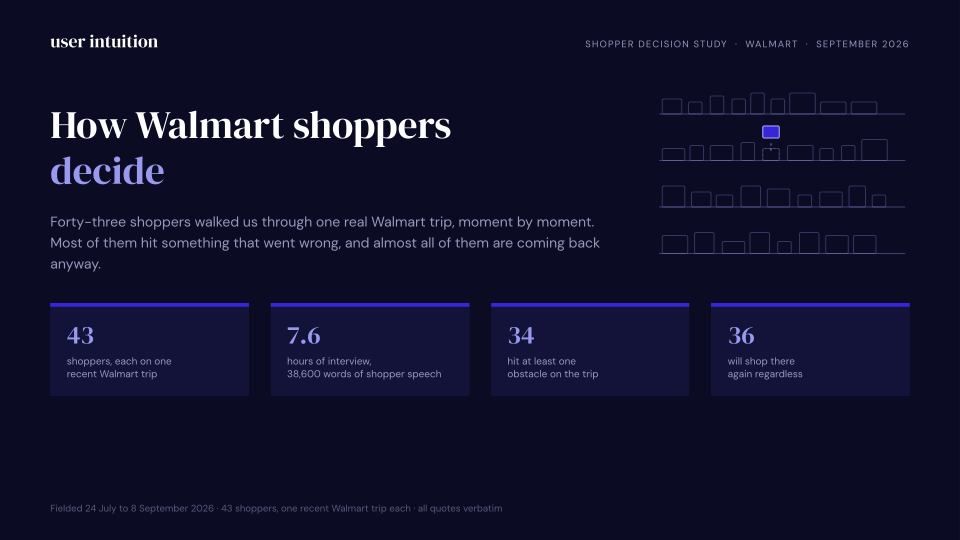
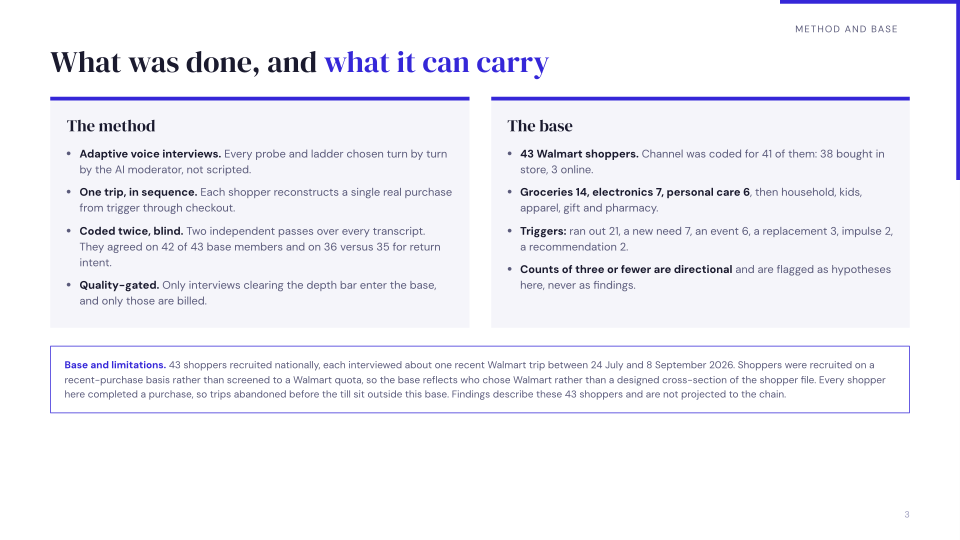
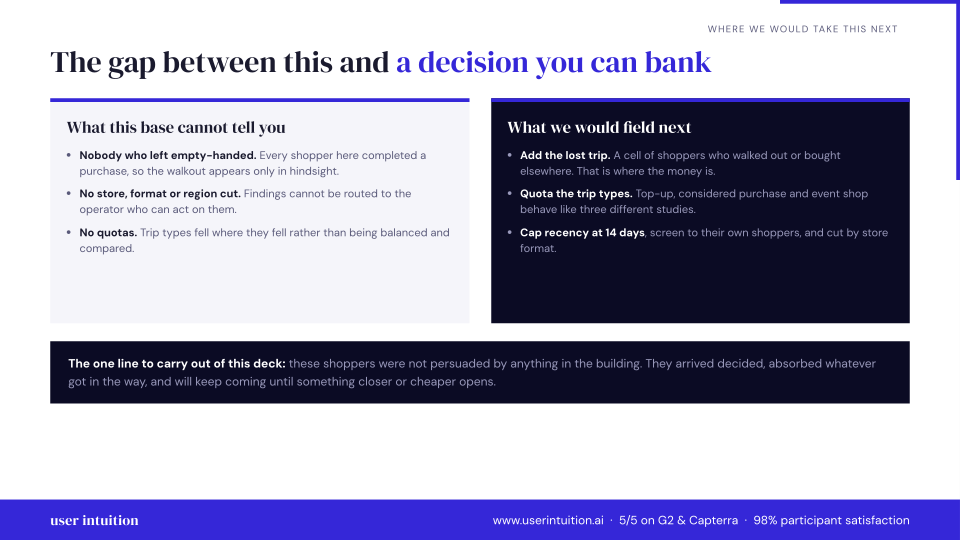
Explore calls and a sample presentation from our 43-participant Walmart shopper study.
Grocery top-up, supercenter
“Basically, because we use those things all a lot We try to always have you know, certain things in the house at all times because we use them very frequently. So we don't like to run out of them.”
What was making you want those specific things right then? Beyond just being out? Was it about being able to make certain meals or something else?
Basically, because we use those things all a lot We try to always have you know, certain things in the house at all times because we use them very frequently. So we don't like to run out of them.
Phone replacement, unplanned and urgent
“It made me feel so safe so relieved, and it brightened my day.”
Sounds like you knew exactly what you want. A Google Pixel 6 Pro. What was it about that phone that made it the right choice for you, especially in that moment?
Yeah. Thank you. So the the the phone had a lot of features. I I heard friends were talking about this phone. So in terms of the camera setting, it can take pictures and refine them into good quality. It has its own internal scanner, like I don't need to download other apps to scan to do scans. And of course, it has high quality for recording, which has been helping me in my meetings. In the office. So it's really amazing, and I love festival the quality of the phone in terms of the camera, because the previous phone I had was a Samsung. And the quality was really frustrating. And it had it has a very good processor speed as well. It's very fast. It's very efficient, and I like it. I like it. I'm enjoying the features.
Sample presentation
Preview three slides, or download the full 15-slide presentation.
Bring your own sample
$30 per quality voice interview
Use our 4M+ vetted panel
$60 per quality voice interview

"User Intuition gave us something we'd never had before — the ability to have hundreds of deep conversations with our consumers in days, not months, and actually use those insights to make decisions in real time. That's not incremental improvement. That's a fundamentally different way of building brands."
Eric O., Chief Commercial Officer, Turning Point Brands
"It tells us what's actually going on under the number. We had dashboards coming out of our ears, we knew the second NPS dropped or churn ticked up, but a dashboard never told us what the customer actually went through to feel that way."
"It's quick to set up, the AI interviews actually hold up, and everything we've ever learned is searchable in one place. That's the direction consumer insights should have gone years ago."
"Collapsed our stack without giving up interview depth, which was the fear. Recruiting, conversations, and the archive live in one place now. Brand questions get answered from what we already know instead of another fielding cycle."
Why researchers choose User Intuition
Senior-researcher depth
The moderator ladders 5–7 levels deep by default, using Reynolds and Gutman's laddering method, so you hear the reasons behind the reasons.
Your methodology, run as written
Bring your discussion guide and frameworks. Required questions stay pinned in order, word for word if you need it, study rules keep the moderator inside your compliance lines, screeners and hard quotas fill every cell to plan, and you decide how far it probes.
Every finding traces to its source
Click any theme through to the verbatim, the transcript and the recording. Every claim in the deliverable traces to what a participant said.
Respondents you can stand behind
A 4M+ vetted panel across 58 countries: our team reviews a video identity interview with every panelist before they're accepted, then every voice interview is screened for AI-generated or coached answers and panelists are tracked across studies. Or bring your own: customer lists, your panel provider, or respondents straight from your survey.
Deliverables ready to present
Themes, verbatims and an editable presentation for every study, plus every transcript, recording and screener answer to export into your own tools. Put your own brand on them when you need to.
Survey scale, quality-only billing
200+ panel interviews in 24 hours, with no cap on parallel conversations. Each one is scored on length, depth and coverage, and you pay only for those that pass.
- Isolated workspaces
- Confidential stimulus
- Never used to train AI models
- GDPR & CCPA compliant
- SOC 2 Type II examination underway
- Security →
Your research data stays private and protected
Customer and participant data is encrypted in transit and at rest, never sold, and never used to train AI models. Deletion is available on request.
Explore our security practices
How does User Intuition compare to other AI-moderated interview tools?
User Intuition ladders 5–7 levels deep by default on your own guide, where Listen Labs, Conveo and Strella leave follow-up depth to the researcher. It recruits from its own 4M+ vetted panel, where Outset and Strella use partner panels and Conveo is not a panel provider, and it publishes its per-interview price and bills only for interviews that pass quality checks.
Run it yourself. Deliver it for clients. Build it into your product.
Agencies, consulting firms, and research teams use the same research platform. Choose the workflow that fits your next brief, or connect research through API and MCP.
Research & Insights Teams
Answer the questions your roadmap cannot wait for. Run customer studies yourself, inspect the evidence, and build on what you already know.
For Insights Teams 02Agencies
Take on more client research without adding a moderator for every interview. Keep your methodology, chosen sample, interpretation, and client relationship.
For Agencies 03Consulting Firms
Interview employees and leaders inside the client organization—or customers, buyers, users, and participants in the client's market.
For Consulting Firms 04Builders & Research Platforms
Add customer research to an existing product through API and MCP. Use User Intuition for fieldwork and analysis while you build the customer experience.
Research InfrastructureWhat Do Teams Use User Intuition For?
User Intuition runs three study types: in-depth interviews that ladder into the reasoning behind decisions, concept tests that capture reactions to creative or product, and interactive walkthroughs that observe live prototype use.
In-depth interviews — when you want to know why
Voice conversations that ladder 5–7 levels into the reasoning behind a decision. Open-ended discovery at scale.
Concept tests — when you have something to show
Show creative, messaging, or product concepts to verified humans and capture structured reactions before you ship.
Interactive walkthroughs — when you need to watch
Participants navigate a prototype, product, or workflow while talking through what they're seeing. Usability and friction surfaced live.
Frequently Asked Questions
Add the Voice of Your Customer to Every Decision
Bring the next question on your roadmap or client brief. Design a study, choose your sample, and review the evidence in one workspace. Start self-serve, or talk through a client or integration requirement with us.
No contract · No retainers · Panel results in 24 hours