
Word · 3 pages
Research proposal
Scope the decision, method, sample, deliverables, and fee.
Download proposalAdd customer and stakeholder evidence to engagements with AI-moderated qualitative research. Preserve your methodology, bring the client's sample or use our 4M+ vetted panel, and review the evidence before recommending action.

Walk me through the last time you made this choice. What tipped it?
The deciding reason surfaced four follow-ups deep, not in the first answer.
Trusted by teams at






Market research for consulting firms is primary evidence gathered to test a client thesis, understand an organization, or explain customer decisions. User Intuition adds AI-moderated qualitative interviews to existing consulting methods, with an approved guide, adaptive follow-up questions, and findings linked to participant evidence. Consultants can bring a client's employees or customers, or recruit market participants through User Intuition's 4M+ vetted panel across 58 countries. The firm keeps the engagement hypothesis, analytical framework, interpretation, and client relationship while interviews run in parallel. User Intuition Starter voice interviews cost $30 per quality call with your sample or $60 with standard panel recruitment, with no monthly fee; specialty audiences require a separate quote. A 30-call User Intuition study costs $900 or $1,800 before the firm's services and any incentives arranged for its own participants. User Intuition panel studies field 200+ interviews in 24 hours. Inspect actual calls and the sample presentation, then decide how the evidence fits your next engagement.
Market research for consulting firms is structured primary research that tests an engagement hypothesis with the people closest to the decision: the client's employees, leaders and operators internally, and its customers, buyers and market participants externally. User Intuition runs that evidence layer as 20–30 minute AI-moderated interviews that ladder 5–7 levels deep, with 200+ panel interviews in 24 hours from a 4M+ vetted panel across 58 countries and the client's own contacts interviewed in parallel as they respond, while consultants keep the problem framing, analysis and recommendation.
Consulting firms and the research agencies that support their engagements, plus in-house strategy and transformation teams who need stakeholder and customer evidence inside the engagement timeline.
Load one approved guide. The AI moderator interviews the client's people, its customers or an independent market sample in voice, video or chat, and every theme links back to the recording and transcript.
Themes with verbatims and counterexamples, reads by function, office, market or segment, an editable presentation, and every transcript and recording.
Consulting timelines reward evidence but punish coordination: surveys scale without the why, and traditional interviews scale only with more calendars. Here's what consultants tell us, and how User Intuition closes each gap.
We know exactly who to talk to. Getting forty interviews on the calendar takes half the engagement.
Interviews run concurrently as invitations are accepted, so first findings arrive while the workstream is open, across stakeholder discovery, win-loss, concept, diligence and transformation work.
Our senior people go deep. Less experienced interviewers take the first plausible answer.
Every conversation follows the same approved guide and 5–7 level laddering across participants, offices, functions and markets, while follow-ups still adapt to each answer.
Transcripts pile up faster than we can code them, and the steering committee is Thursday.
Themes, verbatims and an editable presentation build as quality sessions complete, so the team pressure-tests patterns before the executive workshop or diligence deadline.
The survey flagged the issue. Now we need another research step just to explain it.
Adaptive follow-up investigates an unexpected answer in the moment and moves past stated preferences into the trade-offs, triggers and constraints behind behavior.
I can't defend a claim in the final deck if I can't show where it came from.
Every theme links to verbatims, transcripts and recordings in one hub, so consultants inspect counterexamples, catch cross-workstream contradictions early, and separate a strong pattern from an attractive anecdote.
Every extra interview means more moderator hours, more notes, more synthesis burn.
Add interviews without adding moderator, note-taking or synthesis hours. Interview the client's own people, client-provided customer contacts or independently recruited participants, across markets in 80+ languages.
Translate the engagement hypothesis into a study brief. Define whether the evidence must come from the client's own organization, its customers, or an independently recruited market audience.
Bring client-provided participants with no recruiting charge, recruit from the 4M+ vetted panel, or combine both sources in one research program.
The AI moderator follows the approved guide, adapts to each response, and probes 5-7 levels deep while quality scoring evaluates length, depth, and coverage. Panel studies return 200+ interviews in 24 hours; the client's own contacts are interviewed in parallel as they accept.
Review themes, counterexamples, transcripts, and recordings in the Intelligence Hub. Consultants apply the engagement framework and turn the evidence into the client recommendation.
Interview employees, managers, and leaders about decision rights, operating friction, culture, capability gaps, and change readiness with one consistent research design.
Gather structured evidence across functions, business units, or geographies to understand how a process works and where transformation plans meet resistance.
Interview buyers, users, channel partners, or category participants to understand needs, alternatives, decision criteria, and market structure.
Pressure-test retention, willingness to pay, competitive vulnerability, unmet needs, and expansion potential with customers beyond management-selected references.
Test positioning, service concepts, product propositions, or communications with the intended audience and investigate why each element succeeds or fails.
Interview won buyers, lost buyers, churned customers, and prospects about the decision process, alternatives considered, and moments that changed the outcome.
User Intuition is an AI-moderated interview platform that gives research teams and agencies the depth of a senior researcher at the scale of a survey, with vetted respondents, your own methodology and evidence you can trace to the verbatim. Quality is built in: a person vets every panelist by hand, every session is screened for fraud, and you pay only for interviews that pass.
The moderator ladders 5–7 levels deep by default, using Reynolds and Gutman's laddering method, so you hear the reasons behind the reasons.
Bring your discussion guide and frameworks. Required questions stay pinned in order, word for word if you need it, study rules keep the moderator inside your compliance lines, screeners and hard quotas fill every cell to plan, and you decide how far it probes.
Click any theme through to the verbatim, the transcript and the recording. Every claim in the deliverable traces to what a participant said.
A 4M+ vetted panel across 58 countries: a person listens to every panelist's interviews before they're accepted, then every session is screened for AI-generated or coached answers and panelists are tracked across studies. Or bring your own: customer lists, your panel provider, or respondents straight from your survey.
Themes, verbatims and an editable presentation for every study, plus every transcript, recording and screener answer to export into your own tools. Put your own brand on them when you need to.
200+ panel interviews in 24 hours, with no cap on parallel conversations. Each one is scored on length, depth and coverage, and you pay only for those that pass.
| Dimension | User Intuition | Surveys | Human-Moderated Interviews | Expert Networks |
|---|---|---|---|---|
| What You Learn | Why participants think and behave as they do, with adaptive follow-up and traceable verbatims | What respondents selected or reported within fixed answer paths | Deep context when the moderator has time and skill to pursue it | Industry perspective from selected experts, not necessarily client or customer experience |
| Depth | 5-7 levels of consistent laddering on every interview | Limited adaptive probing; open ends require later interpretation | Potentially deep, but depth varies by moderator and schedule pressure | Deep domain opinion, shaped by the expert's individual vantage point |
| Scale | Interviews run in parallel across workstreams and markets | Thousands of responses in parallel | One moderator and calendar slot at a time | One scheduled expert call at a time |
| Participant Source | Client stakeholders, client customers, independently recruited participants, or a blended sample | Client lists or panel respondents | Client lists, recruiters, or existing networks | Network-selected industry professionals |
| Consistency | Same guide, adaptive logic, and quality criteria across every conversation | Same questions with little in-session adaptation | Probing and notes vary across interviewers | Call quality varies by expert fit and interviewer |
| Evidence Trail | Themes link to participant quotes, transcripts, recordings, and study context | Responses and cross-tabs; reasoning may remain implicit | Recordings and notes require manual consolidation | Call notes or transcripts remain separated by expert |
| Speed | First findings as quality interviews complete; panel studies can return in 24 hours | Fast fielding, followed by analysis and follow-up research | Days or weeks of scheduling, moderation, and synthesis | Days or weeks depending on expert availability and screening |
| Cost | From $150 for a 5-interview study using your own participants | Low cost per response, plus survey design and analysis time | Consultant hours, recruiting, transcription, and manual analysis | Per-call network fees plus consultant preparation and synthesis |
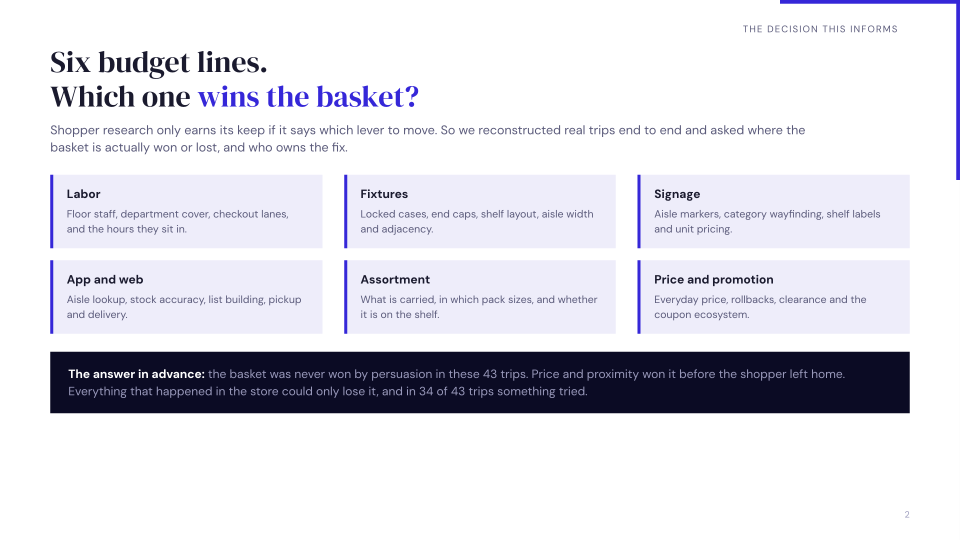
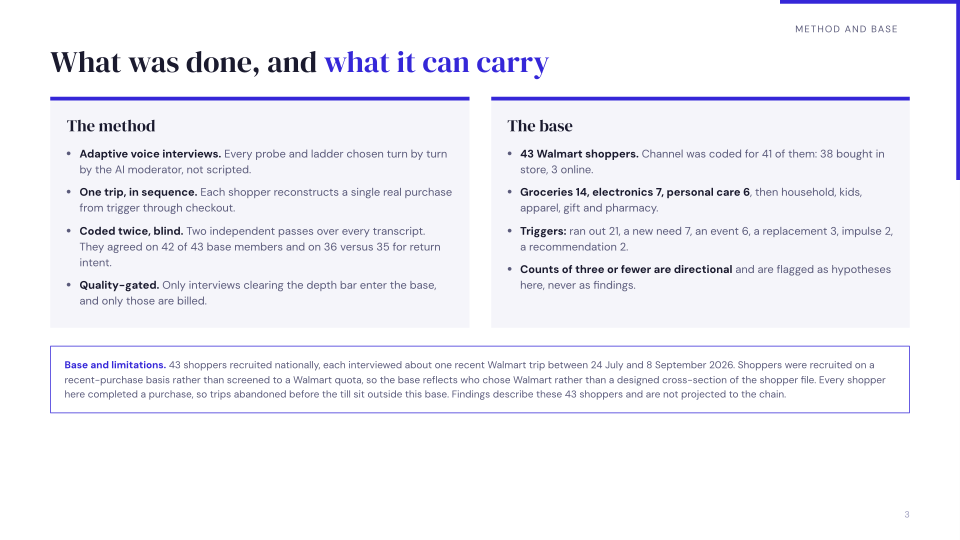
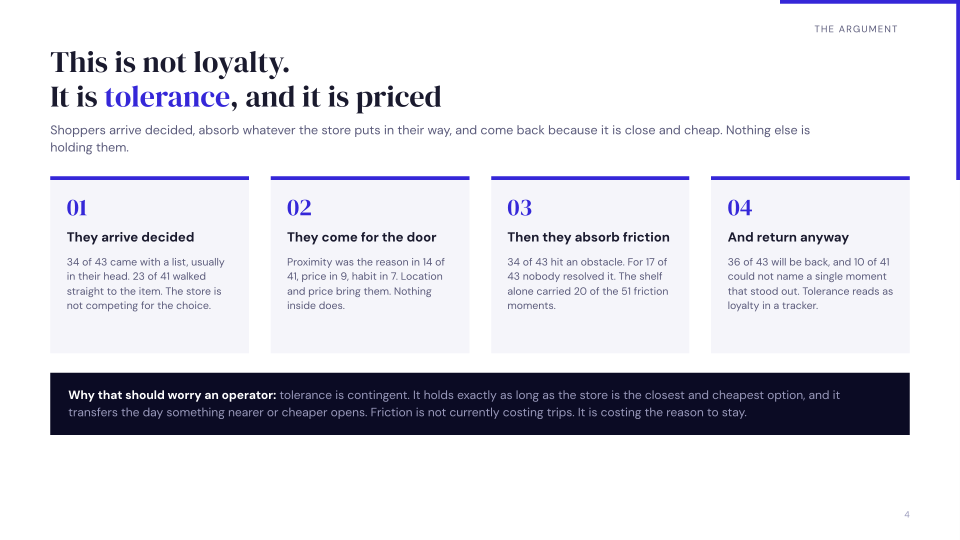
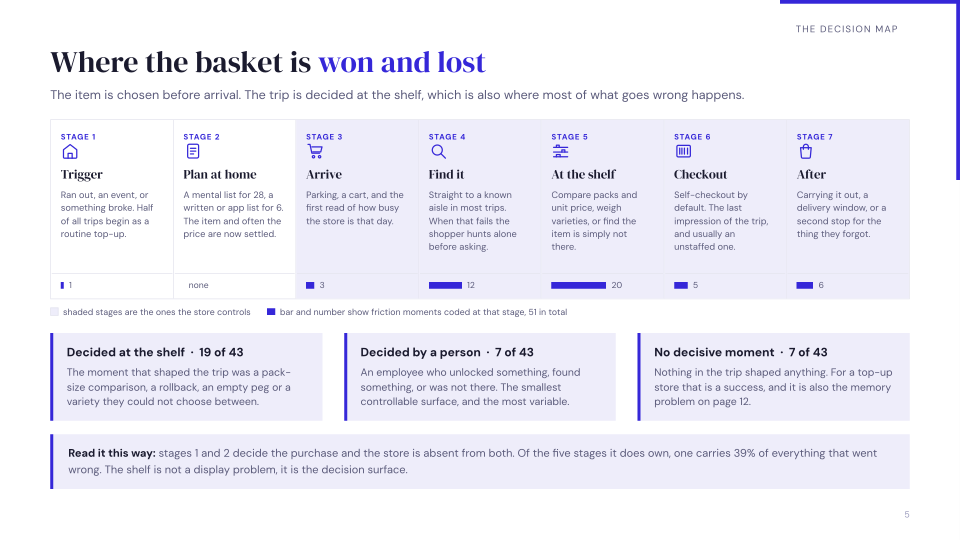
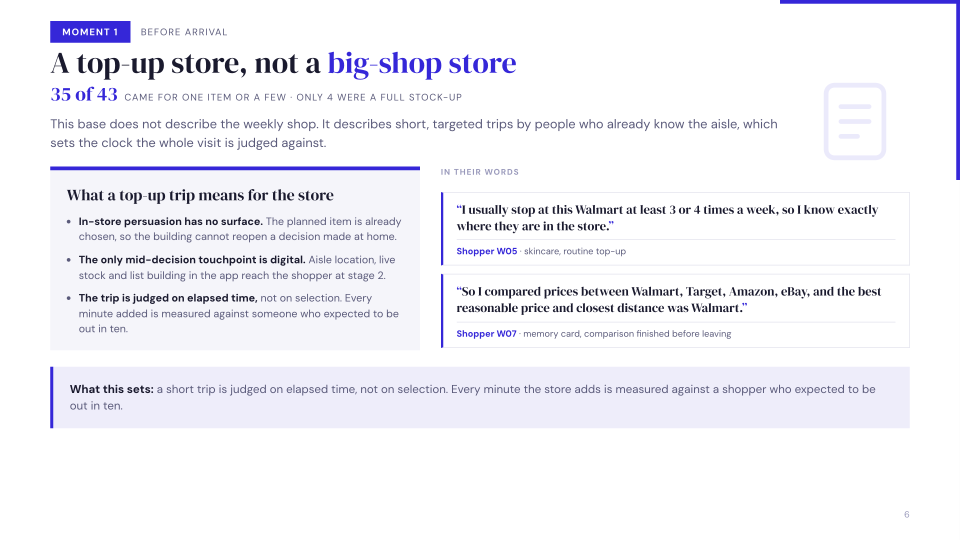
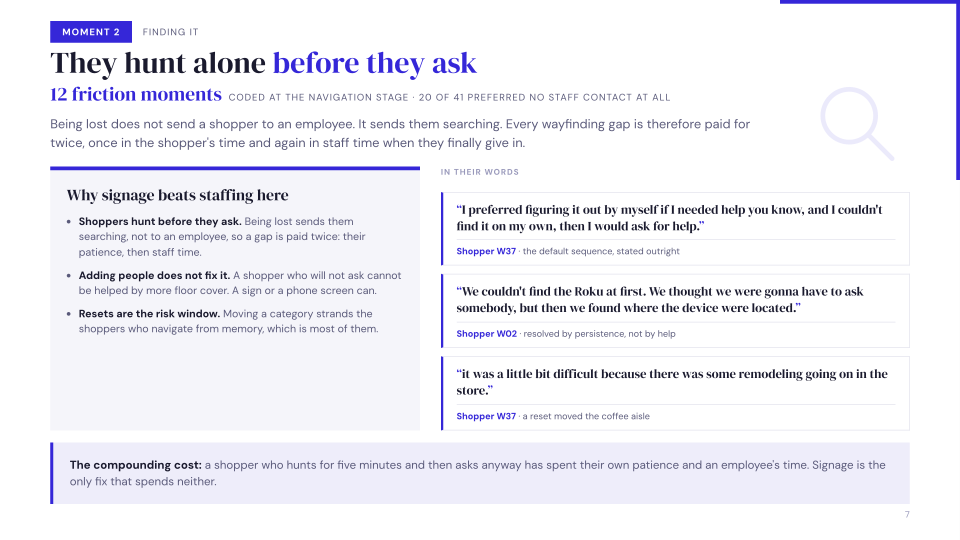
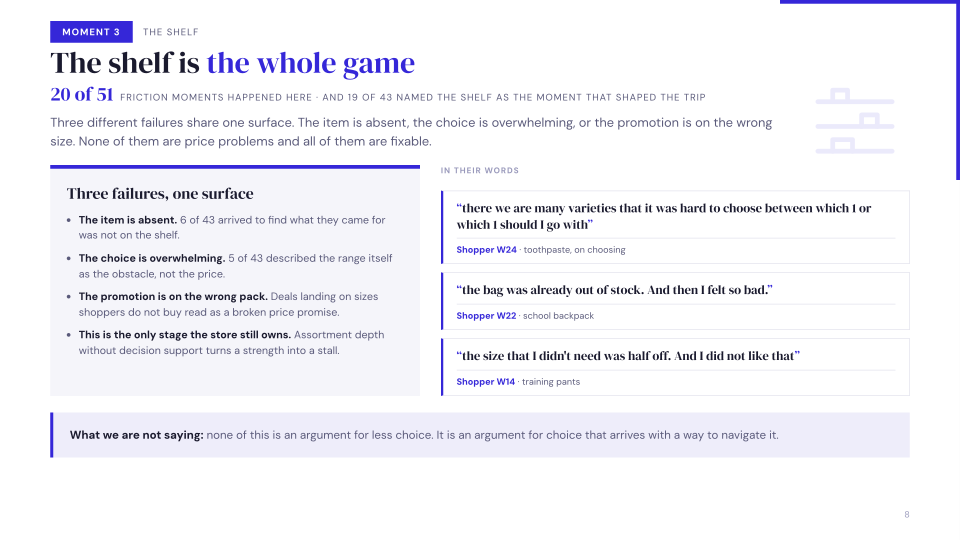
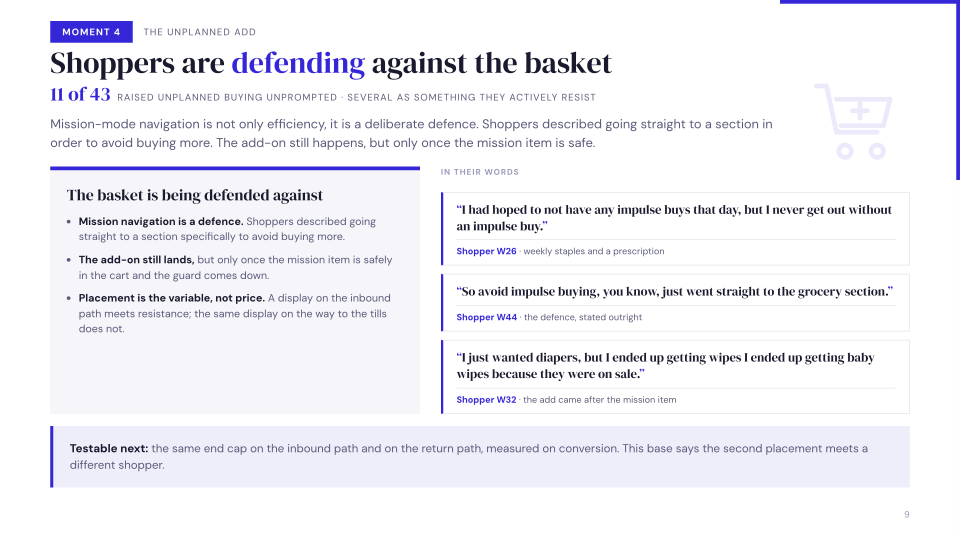
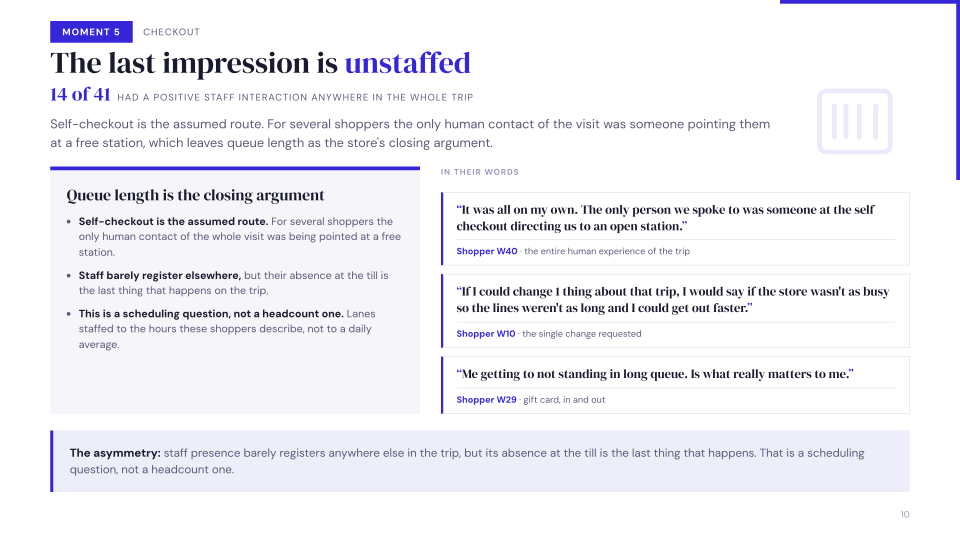
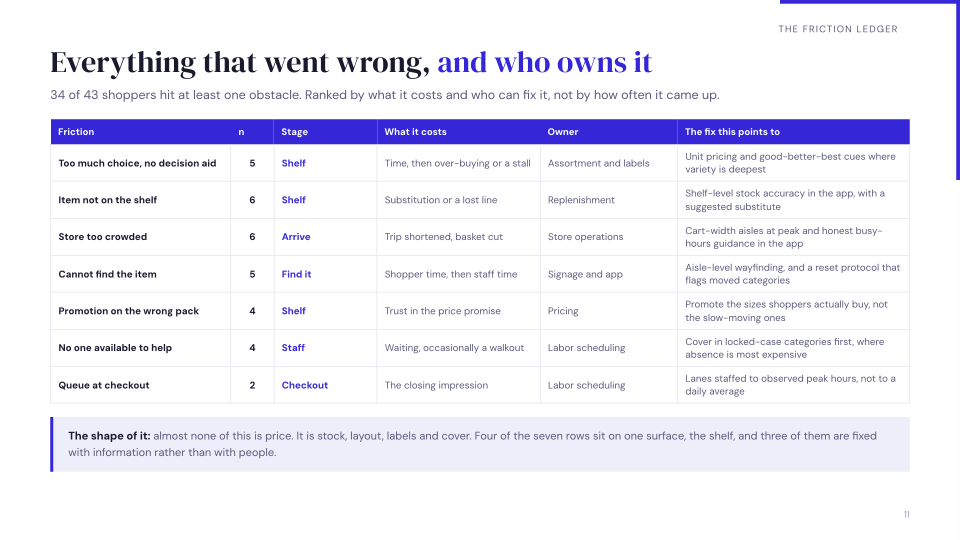
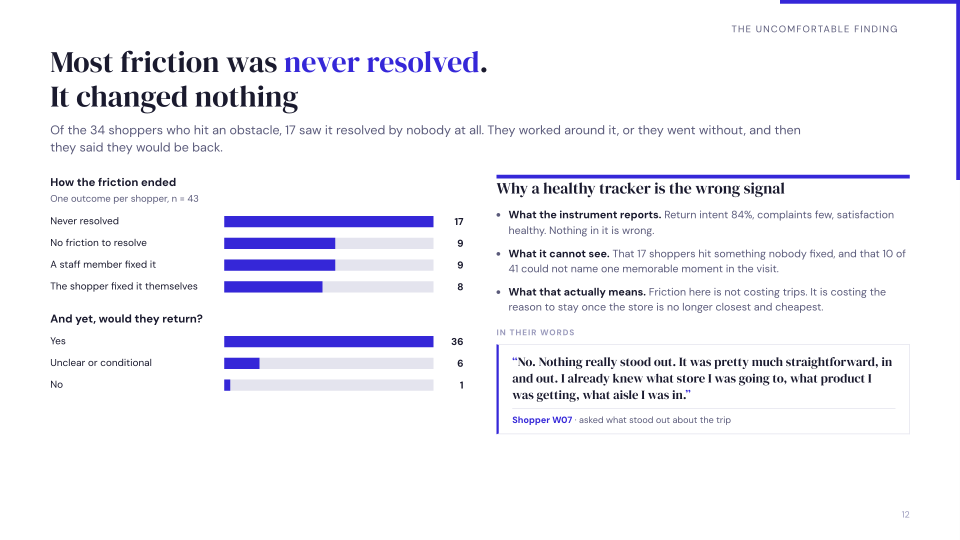
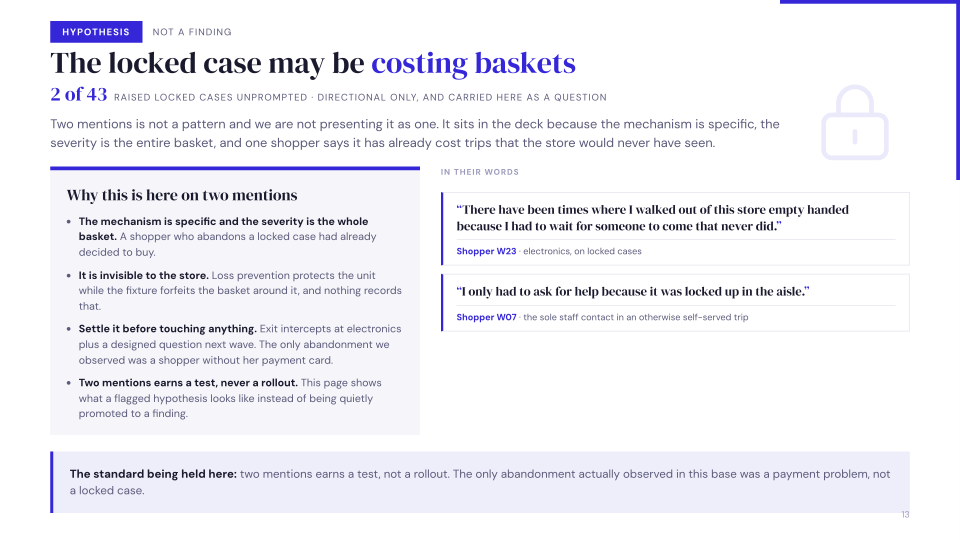
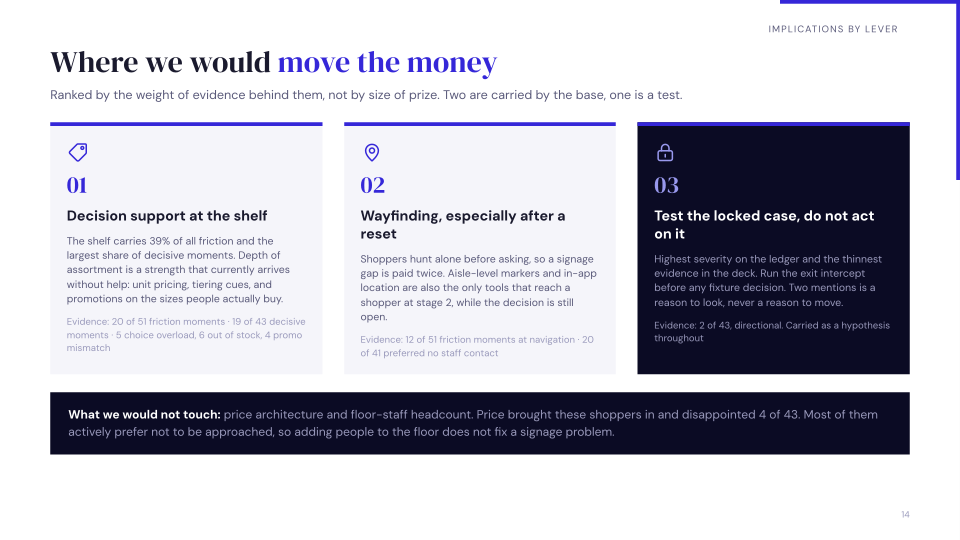
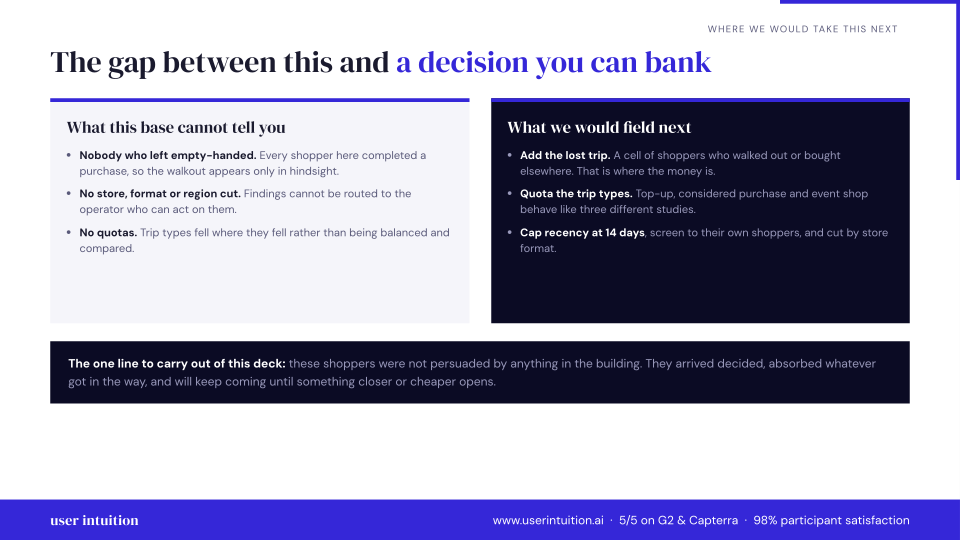
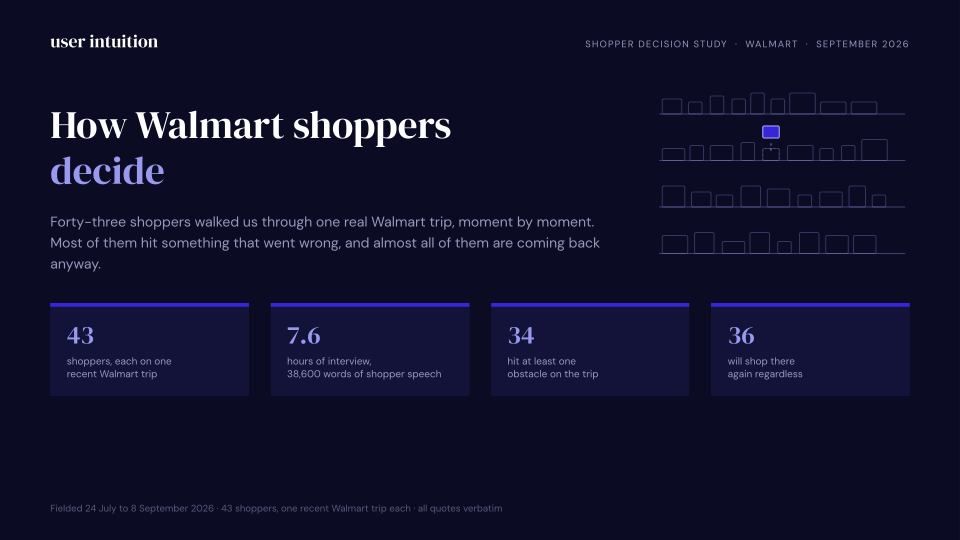
Explore calls and a sample presentation from our 43-participant Walmart shopper study.
“Basically, because we use those things all a lot We try to always have you know, certain things in the house at all times because we use them very frequently. So we don't like to run out of them.”
Hi. I'm Elliot. Your AI moderator. I'm here to learn. No wrong answers, so don't overthink it. The more detail you share, the better. So how are you doing today?
Good. How are you?
I'm doing well. Thanks for asking. So So recently, you bought something in person at a store. I don't have the store name or what you bought just yet. Could you tell me what you picked up most recently and where?
It was at Walmart. And I just purchased mainly just groceries
Got it. Thanks. So you were at Walmart within the past 30 days and picked up groceries. What made you go grocery shopping that day?
Pretty much just little things that we needed.
Walk me through how this grocery trip came about. Where did it start for you?
When I basically went into my kitchen to make my husband something quick to eat for lunch and noticed that we were out of a couple condiments and we were out of cheese for sandwiches and, uh, you know, little things like that. So I started making a little list and that's basically what made me realize that I needed to do a little quick shopping trip.
That makes sense. When you started making that list, what were you hoping to end up with by the time you got back from Walmart?
I was hoping that I was gonna come back with exactly what I needed and maybe a couple other things due to looking through any coupons that I could get my hands on, or any savings or promotional items that they had going on at store I was going to.
What was making you want those specific things right then? Beyond just being out? Was it about being able to make certain meals or something else?
Basically, because we use those things all a lot We try to always have you know, certain things in the house at all times because we use them very frequently. So we don't like to run out of them.
Why Walmart for this trip and not another grocery store? What made it the right choice for you that day?
On Walmart, is basic to us, it's just kinda quicker and it it has everything that we need plus more. We do go to a couple other things or other places. We actually shop online a lot, but if we are going store anywhere, we usually do pick Walmart. Just simply because, like I just said, Walmart usually always has everything we need plus more. It's kind of like a 1 stop shop for us
Take me into your trip. What's the first thing you did when you got to Walmart?
The first thing that I did when I got to Walmart was I made sure that I had my shopping list in hand And then I grabbed a shopping cart because I knew I was going to need it. I always end up grabbing end up walking out with more than I can getting. But I always start with going on 1 side of the store. And ending up on the other side. I like to kind of go aisle to aisle. I don't really shop sporadically throughout the store.
As you went aisle to aisle, what were you looking for along the way? Was it just the list, or were you keeping an eye out for anything else?
That's why I go aisle to aisle on Obviously, I always get what is on my list. I always I always keep an eye out for anything else that we could you know, need in the household or if I always look for sales and promotions mainly. But I always make sure that I have the list in my cart before I you know, choose anything else
How do you usually spot those sales or promotions while you're shopping? Is there something you look for, or do you wait for things to catch your eye?
I usually go online and look throughout I either look on the website first or I if they have a if they have a a coupon book I will grab that and I'll look I'll look through that as I'm browsing a store. I try not to rush That way I can actually see everything.
Did you end up dealing with anyone who works at Walmart during this trip, or were you on your own the whole time?
No. I was pretty much on my own. The whole time for this trip. I don't really like dealing with employees there. I like to kinda be on my own.
Was there a moment during this trip that stood out to you even if it was something small?
Not that I can really think of right this second.
No worries.
Just that it it it's always busy.
Got it. Was the busyness something that got in your way at all, or did it just feel like part of the usual Walmart experience?
Definitely just part of the Walmart experience. It's always like the Again, that's usually why we shop online a lot. But in certain circumstances, if we need it faster, we will go in store.
Of everything about that purchase, what mattered most to you?
Basically, the pricing the prices and getting it that day.
What was it about the pricing and getting it that day that made those things matter most to you?
All of the above. I mean, quality of the product and getting it I mean, getting it that day.
If you could change 1 thing about trip to Walmart, what would have made it better for you?
If I could change 1 thing about that trip, I would say if the store wasn't as busy so the lines weren't as long and I could get out faster.
Would you buy from Walmart again for groceries?
Yes. Definitely.
Would you tell a friend to buy their groceries at Walmart? If so, what would you say to them?
Yes. I would, but I would tell them to shop online.
What would make you recommend shopping online at Walmart instead of going in
How busy it was in store. And you get free delivery if you're a member.
Is there anything else about your grocery shopping trip or how you decide where to shop that you think I should know?
I like 1 1 stop shops. So, I mean, I mainly look at what I need and I compare pricing mostly. But mainly Walmart is a go to.
That's all I had for you today.
You for your time. You can hang up when you're ready.
“It made me feel so safe so relieved, and it brightened my day.”
Hi. I'm Elliot. Your AI moderator. I'm here to learn. No wrong answers, so don't overthink it. The more detail you share, the better. So how are you doing today?
I'm doing great. Thank you so much.
Glad to hear it. Let's jump in! So, within the past 30 days, you bought something in person at a store. I wanna make sure I've got this right. Can you tell me what you picked up and where you bought it?
I bought an an mobile phone at the Walmart shop.
Perfect. Thanks for clarifying. So you were at Walmart and picked up a mobile phone. What made you go looking for a new phone that day?
My old phone was broken, so I had difficulties to communicate and to chat on various social media platforms. So I decided to to get new phone.
Got it. So really started because your old phone broke and you needed to get back to communicating and using social media. Walk me through how it all began. What were you doing right before you decided to head out to Walmart for a new phone?
So I was in the kitchen preparing some meals. And usually, when I see new recipes online, I like to try them out, especially learning on YouTube So while I was watching the tutorials, online, and in the kitchen preparing something, the phone suddenly fell off and broke. And it frustrated me. So next thing, I looked at the nearest Walmart store, and decided decide to get a new phone immediately so that I can I could continue with my my my cooking?
That sounds like a pretty frustrating moment. Right when you needed your phone most. When you decided to go to Walmart, what were you hoping to end up with? It a specific phone in mind or just something that would get you back online quickly?
I was really hoping to to get a phone, a Google a Google phone So I finally got Google Pro 6 and which is very quite helpful because the features are amazing. The camera setting is great. The the volume is so loud, and wow, it just makes me so happy.
Sounds like you knew exactly what you want. A Google Pixel 6 Pro. What was it about that phone that made it the right choice for you, especially in that moment?
Yeah. Thank you. So the the the phone had a lot of features. I I heard friends were talking about this phone. So in terms of the camera setting, it can take pictures and refine them into good quality. It has its own internal scanner, like I don't need to download other apps to scan to do scans. And of course, it has high quality for recording, which has been helping me in my meetings. In the office. So it's really amazing, and I love festival the quality of the phone in terms of the camera, because the previous phone I had was a Samsung. And the quality was really frustrating. And it had it has a very good processor speed as well. It's very fast. It's very efficient, and I like it. I like it. I'm enjoying the features.
You mentioned your friends talked about it and the camera and speed were big draws. Especially since your old Samsung left you frustrated. Why did you choose Walmart for this purchase instead of another store or buying online? What pulled you there?
I choose war Walmart because it was approximate to my to my location. So I needed to to to get a new phone ASAP. I could access phones in other store but Walmart was nearest to me. And of course, Walmart is big. The The staff are are very nice. And they have excellent customer care service.
So speed and convenience were key, plus you trust the staff and the service at Walmart. Take me into the experience itself. When you walked in, what was the first thing you did?
When I walked into the shop, the first thing I I did was to try to seek for help. By by calling the attention of the staff who were in attendance, Mostly in other shops, I get frustrated because many staff sometimes they're standing and they are doing nothing and they are busy and they're snobbish. But the staffs were very nice, and they paid attention. And someone quickly rushed over to my aid, to direct me to the section where I could easily purchase a mobile phone. And that really made made my day because I was in the haste. I wanted to get a a new phone as soon as possible to get back to consume my tutorials. Online.
That sounds like a real relief. Especially since you were in a hurry. When the staff member helped you
Yeah.
what happened in that exchange that stood out to you?
When she helped me, she pointed me in the direction of where we have mobile phones and other accessories because they have several lanes, they have lanes for fresh food, for fast food, for household equipment, for TVs, and for computers, They just pointed me out to to the direction of or where I could get mobile phones. Otherwise, I would have spent more than 30 minutes wandering from 1 place to the other, and add in addition to this, I'm new to the area. So the experience really saved me time which was of the essence to me because I really wanted to get back to my cooking in the kitchen.
That makes a lot of sense. So having someone guide you right away, especially as someone new to the area, really made a difference. Was there a particular moment during your visit that stood out and shaped how you felt about the whole experience?
Let's start with very warm work welcoming, often nice words. And after the point in the direction where I needed to to to look at the mobile phones, the various samples. They pointed me, even gave me a recommendation for the Google Google Pro 6 and the other Google phones. So they didn't they were not just nice, but they took our time to give me different brands. They were patient. That really helps me. So I'm happy for this experience. And I think I'm going to go back to that shop to be able to purchase more equipment or more materials.
It sounds like their patience and willingness to walk you through options really mattered, especially since you were in a rush and new to the What did that leave you feeling in the moment?
It made me feel so safe so relieved, and it brightened my day. Because unlike my previous experience in different stores, which I beg for permission not to mention their names, I felt frustrated better And at the same time, since I'm a black person, I thought honestly, it was a race issue. But keeping my feelings aside, the experience I got from the Worldmart Show was completely different because I felt safe I felt happy, and it made my day because I was able to get back to my cooking in time. Which was something very wonderful.
Thank you for sharing that. Sounds like feeling safe, respected, and genuinely helped really shape your experience at Walmart. Especially compared to what you felt elsewhere. Of everything about that purchase, what mattered most to you?
The 1 thing that mattered most to me was their abilities with patients. To take me on a mini tour for the section where I had to buy the the mobile phone to take time to explain to me the different brands, and the accessories and the properties of each phone, And of course, showing me other lanes of things I could buy, like, oh, if you want to get a flat screen for your home, if you want to get, I mean, household equipment, it was It was like, I mean, a whole package I came there for a mobile phone, but they showed me several things and told me interesting things about quality of their products, And my overall experience is that this same manner that I was treated for buying the mobile phone the same treatment I'm gonna get if I go to buy other things at the store. So that leaves me extremely delighted.
That sounds like a great experience. If you could change 1 thing about that purchase or make it even better, what would it be?
If I could change 1 thing about that purchase, I will probably say they should be able to put up like, digital screens for the sections that has different goods, like mobile phones and accessories, smart TVs, fresh food, household kitchen utensils, I know just different sections for each type of product that they're selling, uh, with digital science on the alley on the alleyway. That works.
That's a really clear suggestion. Digital signs to help people find what they need faster. Would you buy from Walmart again after this experience?
Definitely, of course, I'm going to buy from Walmart. I think when when you've when you when you have money, and you get to a service and you feel respected, that that that that that that is a priceless and a rewarding feeling. So, yes, I'm going to buy from Walmart. The next time.
If a friend asked you about buying a phone from Walmart, what would you tell them?
But tell them that first, they are going to save a lot of time. The the the staff are very warm. Welcoming. And did not discriminate against your color no matter your nationality or your race. And I will tell them, that they will be able to get high quality products as well. Because it does not suffice for you to experience good customer care But I think the quality of the product you're going to purchase also matters. So it's a combination of quality of products plus quality of service.
Thank you for being so open and detailed. Is there anything about your experience at Walmart or buying your phone that we didn't talk about? But you think is important to mention.
Think, uh, they should
Take your time. What else
they should because okay. Thank you. Thank you for giving me the opportunity. I think they should open, like like, a program to help those who are in need like, a secondhand treats, like a secondhand shop where people who cannot afford high quality goods could can afford goods that that are of high quality but are of secondhand.
That's a thoughtful idea. Having a second hand section so more people can access good products at lower Thanks for sharing that. I really appreciate you walking me through your whole experience and all the details. That's everything I needed. Again for your time and openness. I hope the new phone keeps making your days brighter.
Thank you. I got it
That's all I had for you today. Thank you for your time. You can end the interview when you're ready.
Explore all 15 slides, from shopper evidence to recommendations.
$30 per quality voice interview
$60 per quality voice interview
Templates for agencies, consulting firms, and research teams using User Intuition. Adapt the scope, keep your methodology, and make the work clear to your client.
Word · 3 pages
Scope the decision, method, sample, deliverables, and fee.
Download proposalPowerPoint · 5 slides
Present the brief, research approach, evidence, and next step.
Download pitchExcel · 1 worksheet
Model recruitment, researcher time, contingency, and margin.
Download budget"I find User Intuition really easy for collecting data, especially in conducting quick interviews with senior stakeholders. On the user's side, it's great that they can use it whenever they're ready, and even pause and restart interviews. It's really fast, which is super handy."
"We spoke with eight admins, six end users, and three buyers in a week. I started with a half-page brief on Tuesday and had conversations by Friday. We cut the MVP down to a status view and saved a ton of time."
Start with a live engagement question. Interview the client's organization, its customers, or an independently recruited market audience and inspect the evidence before the next steering meeting.
Turn an engagement hypothesis into adaptive interviews and evidence-backed findings.
Review participant sourcing, workspaces, security, and evidence workflows for consulting teams.
Walk through a real study from participant conversation to traceable finding.
Pay per quality interview · No monthly fee on Starter
Deep-dive guides covering this topic from strategy to execution.
Practical frameworks and platform-specific guides for teams ready to act.
Reference deep-dives on methodology, best practices, and applied research.
Side-by-side comparisons with competing platforms and approaches.
Complementary research use cases that pair with this topic.
The platform features that power this type of research.
Last updated