
Brand health tracking that explains why the score moved
Run depth interviews alongside your quant tracker, with the same guide core every wave, so each movement comes with the consumer's reasons in their own words.

From individual interviews to a clearer picture.
Why trust moved: "They changed the formula and nobody told us. That's when I started reading the label."
Trusted by teams at






An AI brand health tracking platform is software that runs consumer interviews with a stable guide core on a recurring cadence, so brands can see perception drifting before awareness numbers do. User Intuition is brand health tracking software powered by AI-moderated interviews, running interview waves alongside your quant tracker that ladder 5-7 levels deep into the why behind every metric movement. Across 1,120 AI-moderated brand tracking interviews with CPG and retail brands, User Intuition found that awareness gains masked perception erosion: consumers knew the brand but trusted it less than a year ago. That divergence is invisible in survey-only trackers and only surfaces when the same questions are asked in conversation across waves. A User Intuition brand tracking study starts at $150, returns wave-over-wave results in 24 hours, and is backed by 4.9/5 on G2 and 5/5 on Capterra. The output is practical: wave-over-wave shifts in trust, consideration, and category fit, with verbatim evidence behind every change for brand, marketing, and category leaders.
What is brand health tracking with User Intuition?
Brand health tracking with User Intuition is the explanation layer beside your quant tracker: 20–30 minute AI-moderated interviews that ladder 5–7 levels into why awareness, consideration and brand equity moved. Re-run the same guide core every wave and get 200+ panel interviews in 24 hours from a 4M+ vetted panel across 58 countries, or bring your own sample.
Who is brand health tracking with User Intuition for?
Research agencies running brand trackers, and in-house brand and insights teams who need the reasons behind each wave before the next one fields.
How does AI-moderated brand tracking work?
Set a stable guide core plus probes for whatever the tracker flagged. The AI moderator interviews category buyers in voice, video or chat, and every finding links back to the recording.
What do you get from each brand health wave?
Wave-over-wave themes with verbatims, segment and competitor reads, an editable presentation, and every transcript and recording.
Why does brand health tracking show the score moved, but not why?
Your tracker measures the movement wave after wave, but it was never built to explain it. Here's what brand and insights researchers tell us, and how User Intuition closes each gap.
- Sound familiar?
Consideration dipped this wave. The tracker shows where, and nobody can tell me why.
The reasons behind every tracker movement
Interview the segments and markets the tracker flagged, and the moderator ladders 5–7 levels into what consumers now think about the brand that they didn't think last quarter.
- Sound familiar?
Our open-end says “they're more expensive now” in six words. Nobody asks what changed.
Follow-ups the open-end never gets
Send respondents from your tracker survey straight into an interview by link, and every “too expensive” answer gets probed: what changed, compared with what, and what would win them back, in the consumer's own words.
- Sound familiar?
Awareness rose after the campaign. I can't tell if the message landed or people just remember the ad.
Before-and-after reads on every campaign
Interview consumers before and after launch with the same guide core, so the tracker's post-campaign read comes with what people took from the message.
- Sound familiar?
“Innovative” means premium to our buyers and cutting-edge to theirs. The tracker scores both the same.
Competitive brand perception in consumers' own words
Laddering surfaces what each attribute means for your brand versus a competitor's across the consideration set, so brand equity measurement shows the difference a score hides.
- Sound familiar?
By the time custom qual explains last wave, the next wave has already fielded.
200+ brand interviews in 24 hours
An interview wave can follow every tracker read instead of one qual project a year, run across markets in 80+ languages, and you pay only for interviews that pass.
- Sound familiar?
Every wave's qual is a separate deck. Nobody can see how the language about our brand shifted over a year.
A stable guide core, wave after wave
User Intuition re-runs your guide core every wave, with required questions pinned in order and worded the same, and adds probes for what the tracker flagged. Each wave lands in your Intelligence Hub, so you catch perception erosion before it reaches sales.
From brand question to perception trend line
Design The Study
Define the brand perception dimensions you want to track — equity drivers, competitive positioning, messaging resonance — and select your consumer segments. Bring your own guide, or our AI builds the brand tracking guide, screener, and wave methodology.
AI Conducts the Conversations
Each consumer completes a 20–30 minute AI-moderated voice interview exploring brand associations, competitive perceptions, and purchase drivers. The AI probes deeper on why perception is shifting — not just that awareness moved.
Get Evidence-Backed Results
Receive a structured brand health report with equity driver rankings, perception trend data, competitive positioning maps, and consumer verbatims — shareable across brand, marketing, and leadership teams.
Create Compounding Intelligence
Every brand wave feeds your searchable intelligence hub. Compare perception shifts quarter over quarter, detect brand erosion before it hits sales, and re-mine past waves when new competitive threats or campaign questions arise.
Real-world applications
for Brand Health Tracking
Explain Every Tracker Wave
After each wave, interview consumers in the segments that moved, on a stable guide core, with reasons back in 24 hours.
Pre & Post Campaign
Interview consumers before and after launch on the same guide core to hear whether the new positioning landed.
Competitive Threat Response
Understand what a new competitor owns in consumers' minds and whether they're taking share from you.
Brand Repositioning
Moving upmarket? Test whether consumers will accept the shift and what needs to change.
Seasonal Validation
Test whether your campaign signals "value" or "desperation" before committing the media budget.
Shelf Diagnostics
Volume flat? Surface whether the barrier is shelf position, packaging, price, or perception.
Why researchers choose User Intuition
User Intuition is an AI-moderated interview platform that gives research teams and agencies the depth of a senior researcher at the scale of a survey, with vetted respondents, your own methodology and evidence you can trace to the verbatim. Quality is built in: a person vets every panelist by hand, every session is screened for fraud, and you pay only for interviews that pass.
Senior-researcher depth
The moderator ladders 5–7 levels deep by default, using Reynolds and Gutman's laddering method, so you hear the reasons behind the reasons.
Your methodology, run as written
Bring your discussion guide and frameworks. Required questions stay pinned in order, word for word if you need it, study rules keep the moderator inside your compliance lines, screeners and hard quotas fill every cell to plan, and you decide how far it probes.
Every finding traces to its source
Click any theme through to the verbatim, the transcript and the recording. Nothing in the deliverable you can’t defend.
Respondents you can stand behind
A 4M+ vetted panel across 58 countries: a person listens to every panelist's interviews before they're accepted, then every session is screened for AI-generated or coached answers and panelists are tracked across studies. Or bring your own: customer lists, your panel provider, or respondents straight from your survey.
Deliverables ready to present
Themes, verbatims and an editable presentation for every study, plus every transcript, recording and screener answer to export into your own tools. Put your own brand on them when you need to.
Survey scale, quality-only billing
200+ panel interviews in 24 hours, with no cap on parallel conversations. Each one is scored on length, depth and coverage, and you pay only for those that pass.
- Isolated workspaces
- Confidential stimulus
- Never used to train AI models
- GDPR & CCPA compliant
- SOC 2 Type II examination underway
- Security →
What depth interviews add to your tracker and syndicated data
| Dimension | User Intuition | Quant Brand Tracker | Syndicated Data (Nielsen / Mintel) |
|---|---|---|---|
| Tracking Cadence | Every wave — launch a follow-up the day a score moves | Fixed waves on a fixed questionnaire | Monthly or quarterly reports on fixed schedule; no custom timing |
| Depth Beyond Metrics | 20–30 min conversations probing 5–7 levels into WHY perception shifted | Awareness/consideration/preference scores; limited qualitative depth | Category-level trends; no brand-specific qualitative insight |
| Time to Results | 24 hours per wave | Scores on the tracker schedule; reasons need a separate qual project (6–12 weeks) | Monthly publication lag; no custom turnaround |
| Cost per Wave | $60 per interview with standard panel recruitment; a 50-interview wave is $3,000 | Annual contract; follow-up qual priced as a separate project | Annual subscription; fixed reports, no per-wave flexibility |
| Competitive Context | Direct consumer comparisons of your brand vs. competitors in their own words | Competitive data available but surface-level; no motivation drivers | Category benchmarks only; limited head-to-head brand comparison |
| Custom Methodology | Design your own brand dimensions, segments, and tracking questions | Standardized questionnaire; limited customization per wave | Fixed methodology across all subscribers; no customization |
| Qualitative Drivers | Full verbatim consumer language explaining emotional and functional brand associations | Optional open-ends; rarely probed beyond surface | No qualitative component; quantitative trend data only |
| Knowledge Retention | Searchable intelligence hub that compounds across every wave | Wave-by-wave reports; cross-wave analysis requires manual effort | Dashboard access; historical comparison limited to subscription period |
Hear the interviews. See the presentation.
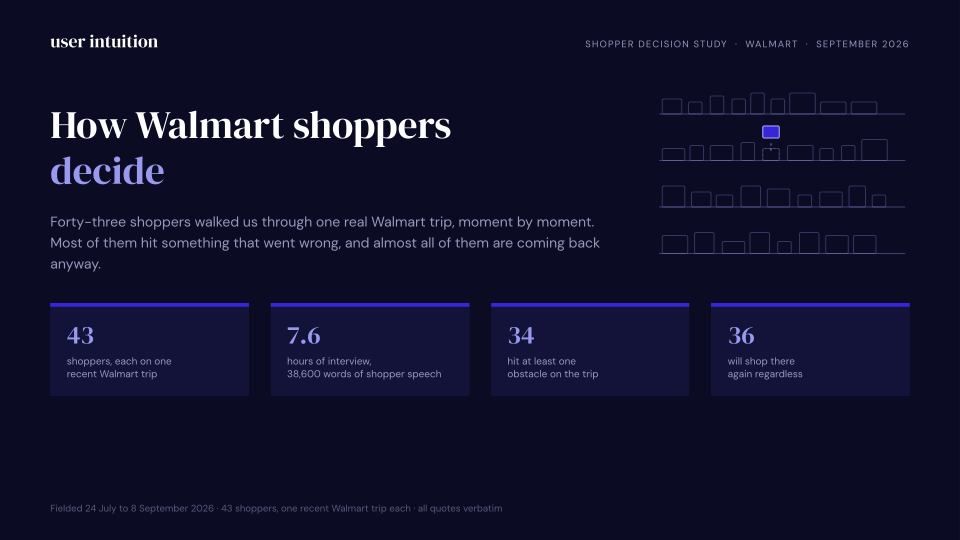
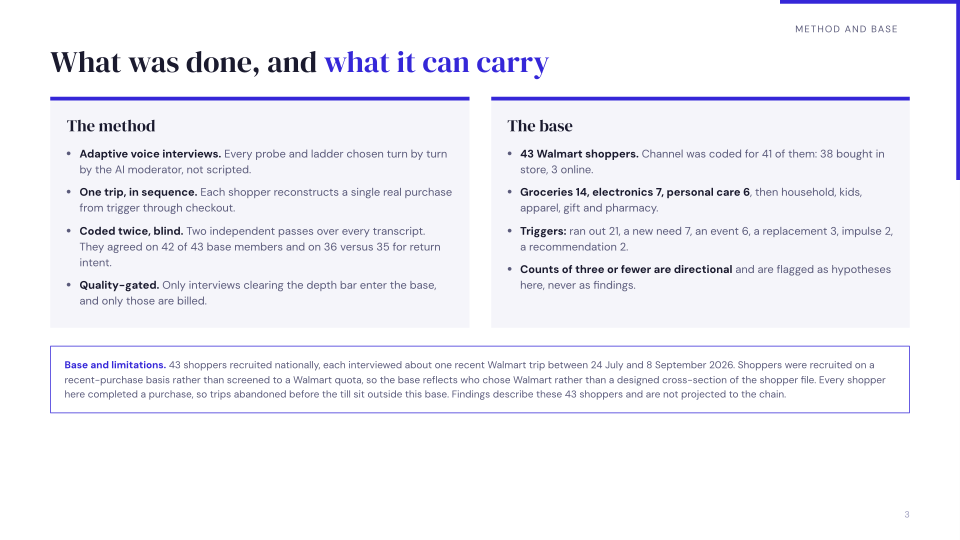
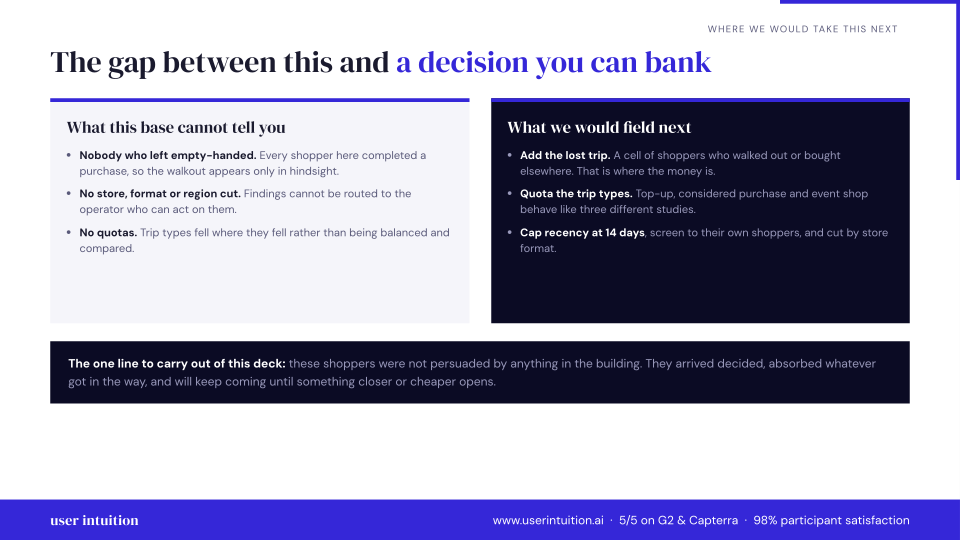
Explore calls and a sample presentation from our 43-participant Walmart shopper study.
Grocery top-up, supercenter
“Basically, because we use those things all a lot We try to always have you know, certain things in the house at all times because we use them very frequently. So we don't like to run out of them.”
What was making you want those specific things right then? Beyond just being out? Was it about being able to make certain meals or something else?
Basically, because we use those things all a lot We try to always have you know, certain things in the house at all times because we use them very frequently. So we don't like to run out of them.
Phone replacement, unplanned and urgent
“It made me feel so safe so relieved, and it brightened my day.”
Sounds like you knew exactly what you want. A Google Pixel 6 Pro. What was it about that phone that made it the right choice for you, especially in that moment?
Yeah. Thank you. So the the the phone had a lot of features. I I heard friends were talking about this phone. So in terms of the camera setting, it can take pictures and refine them into good quality. It has its own internal scanner, like I don't need to download other apps to scan to do scans. And of course, it has high quality for recording, which has been helping me in my meetings. In the office. So it's really amazing, and I love festival the quality of the phone in terms of the camera, because the previous phone I had was a Samsung. And the quality was really frustrating. And it had it has a very good processor speed as well. It's very fast. It's very efficient, and I like it. I like it. I'm enjoying the features.
Sample presentation
Preview three slides, or download the full 15-slide presentation.
Bring your own sample
$30 per quality voice interview
Use our 4M+ vetted panel
$60 per quality voice interview
What researchers say
"The depth of insight rivals expensive user research, but the scale is completely different. We went from 12 win/loss interviews per quarter to 200+. Now we can segment by industry, deal size, and competitor."
"After a few studies you've built up this base of consumer conversations you can go back and query anytime. You don't have to re-ask questions you've already explored. New studies build on what you already know, so each one gets more targeted and more valuable. We went from running brand studies once every six months to having a living, breathing picture of how we're doing that anyone on the team can check at any point."
 Eric O., Chief Commercial Officer, Turning Point Brands
Verified review on Capterra
Eric O., Chief Commercial Officer, Turning Point Brands
Verified review on Capterra Common questions
Brand intelligence that
compounds quarterly
In 24 hours, understand your brand perception. Six months from now, read every tracker movement with the reasons behind it.
Start with an editable research brief. Review your plan and discussion guide before inviting participants.
See quarterly brand tracking in action. We'll help you design a continuous monitoring program.
Your methodology · Your sample · No monthly fee on Starter
Go deeper on Brand Health Tracking
Pillar Guides
Deep-dive guides covering this topic from strategy to execution.
Tools & Tactics
Practical frameworks and platform-specific guides for teams ready to act.
Reference Guides
Reference deep-dives on methodology, best practices, and applied research.
Alternatives & Comparisons
Side-by-side comparisons with competing platforms and approaches.
Platform Capabilities
The platform features that power this type of research.
Last updated