
The customer insights platform that builds compounding intelligence
Answer more research questions with the same team. Keep your methodology, bring your own sample or use our 4M participant panel, and build a searchable history of interviews and evidence.

From individual interviews to a clearer picture.
Cross-study synthesis reveals premium perception drivers consistent across 3 prior brand studies...
Trusted by teams at






A customer insights platform helps research teams collect, organize, and retrieve evidence for business decisions. User Intuition combines AI-moderated qualitative interviews with a searchable Customer Intelligence Hub, so each new study adds context that colleagues can review and reuse. Your researchers set the learning goals, approve the discussion guide, and assess the findings; AI moderation expands interviewing capacity and supports first-pass analysis. Bring your own sample or recruit through User Intuition's 4M participant panel, then inspect recordings, transcripts, and participant quotations alongside the themes. Starter voice interviews cost $30 per quality call with your sample or $60 with standard panel recruitment, with no monthly fee; specialty audiences are quoted separately. Thirty interviews cost $900 or $1,800 before any incentives you arrange for your own sample. This supports small follow-up studies as well as larger programs, while research teams retain methodology, judgment, and the decision about what evidence is sufficient.
- The question
- How should a healthcare client price primary and urgent care?
- The evidence
- AI-moderated patient interviews within an agency-led research program.
- The outcome
- Carevoices delivered the study in under two weeks and reports more than 3× the concurrent study capacity.
How Do Insights Teams Build Knowledge That Compounds?
Most insights teams run high-quality research that quietly disappears after the readout. Each study gets filed, summarized in a deck, and forgotten by the time the next question arises. One-off studies never compound.
Knowledge Silos Across Studies
Findings from last quarter's brand study sit in a deck nobody opens. The team running concept testing this quarter has no way to access or build on prior learnings.
More Briefs Than Fieldwork Capacity
Your team balances new briefs, ongoing programs, and evidence review. Interview scheduling and first-pass analysis can limit how many questions fit inside a research cycle.
Turnaround Kills Relevance
When fieldwork takes longer than the decision window, stakeholders may act before the evidence is ready. Parallel interviewing helps when participants are available.
Quantitative Surveys Miss the Why
Surveys tell you 68% prefer option A. They can't tell you why — or what to do about the 32% who didn't. You're making decisions on incomplete evidence.
Turnover Erases Institutional Memory
When a senior researcher leaves, years of accumulated understanding walk out the door. The replacement starts from zero with no searchable record of what's already been learned.
No Cross-Study Synthesis
You've run 40 studies this year but can't answer 'what do we know about premium perception across all our research?' There's no way to query findings across projects.
How Does User Intuition Build Intelligence That Compounds?
Insights teams use User Intuition to turn one-off studies into a searchable intelligence system. Every AI-moderated study feeds the same hub, so findings accumulate, cross-study patterns emerge, and institutional knowledge survives turnover instead of disappearing into slide decks that nobody reopens six months later.
How do insights teams stop losing knowledge between studies?
Every study feeds a permanent, searchable intelligence hub. Cross-study patterns surface automatically, and new team members query the full history of past research instead of starting from zero when they join.
How can research teams answer more questions with the same team?
Keep researchers focused on design and judgment while AI handles parallel interviewing and first-pass analysis. Starter voice interviews cost $30 with your sample or $60 with standard panel recruitment, per quality interview. Recruitment timing and specialist costs depend on the audience.
How do insights teams ensure research knowledge survives turnover?
The intelligence hub stores every finding, verbatim, and theme permanently. When a senior researcher leaves, nothing is lost. Replacements query years of accumulated evidence instead of rebuilding institutional memory from scratch.
Hear the interviews. See the presentation.
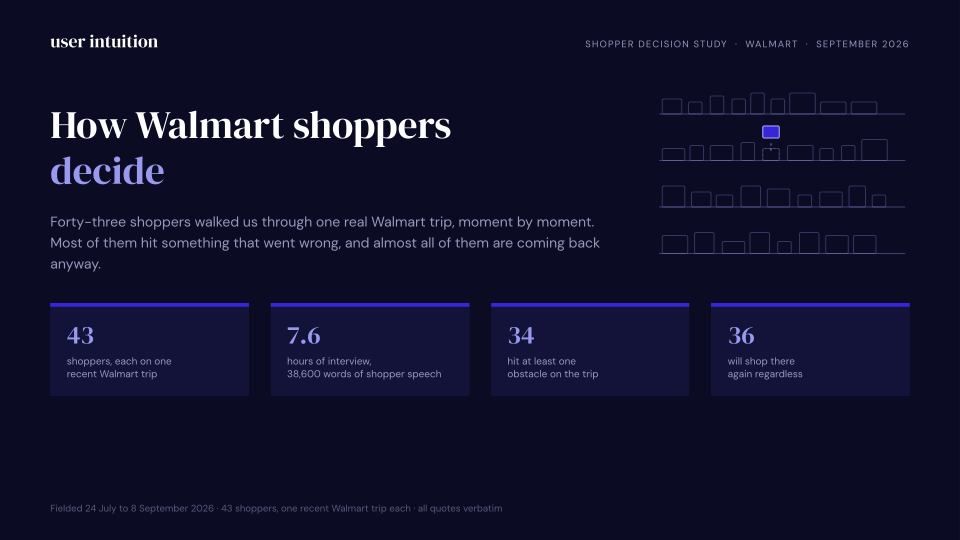
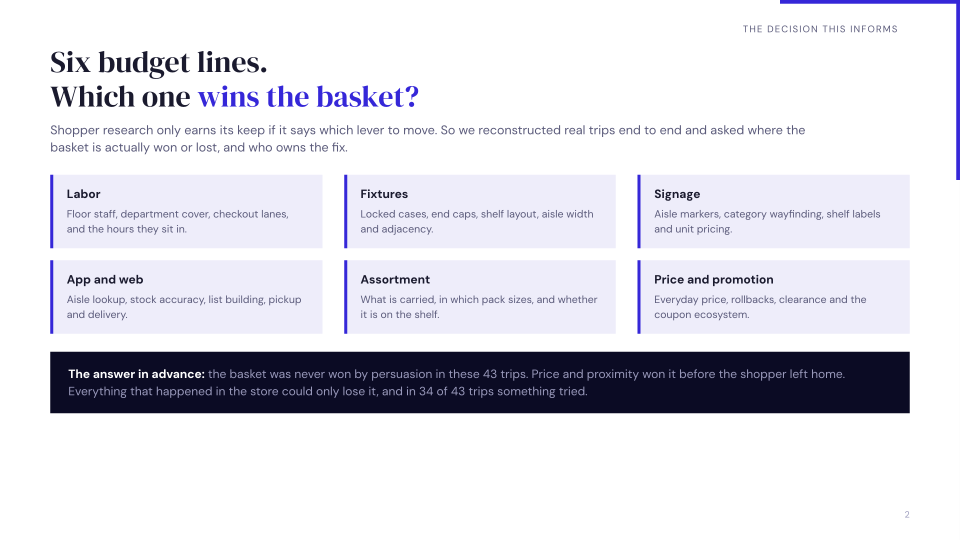
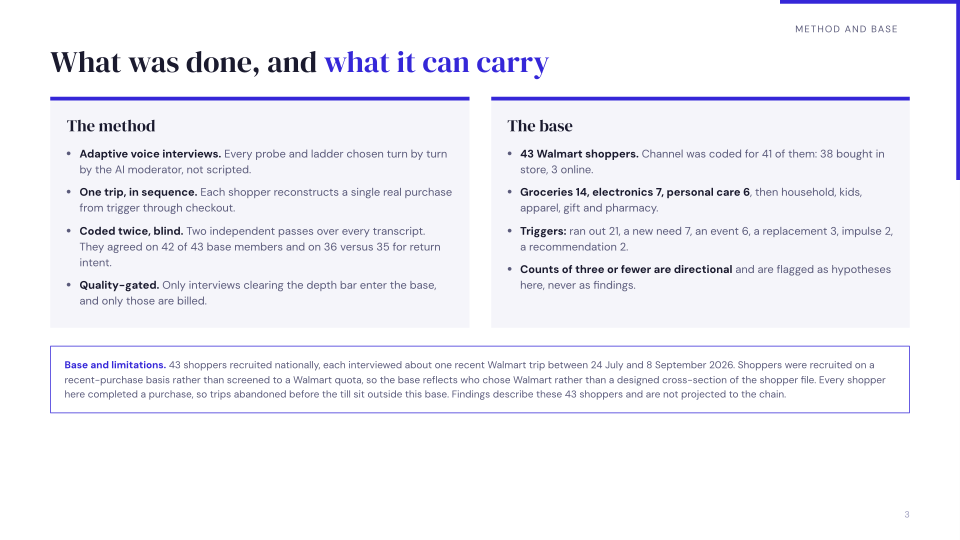
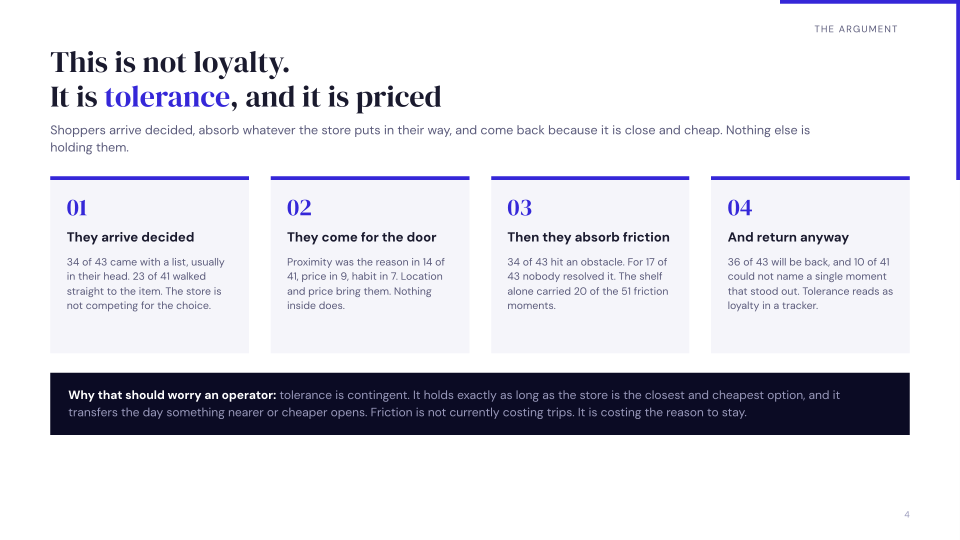
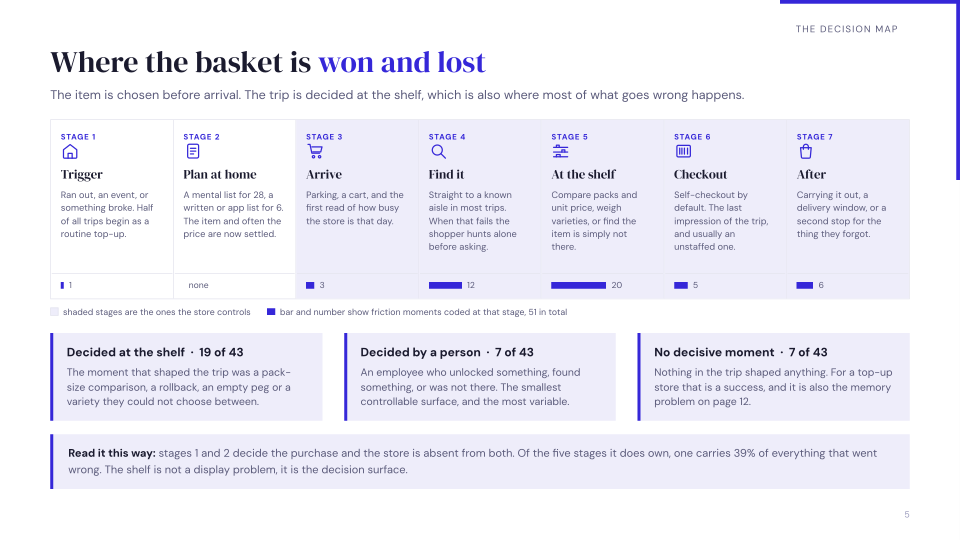
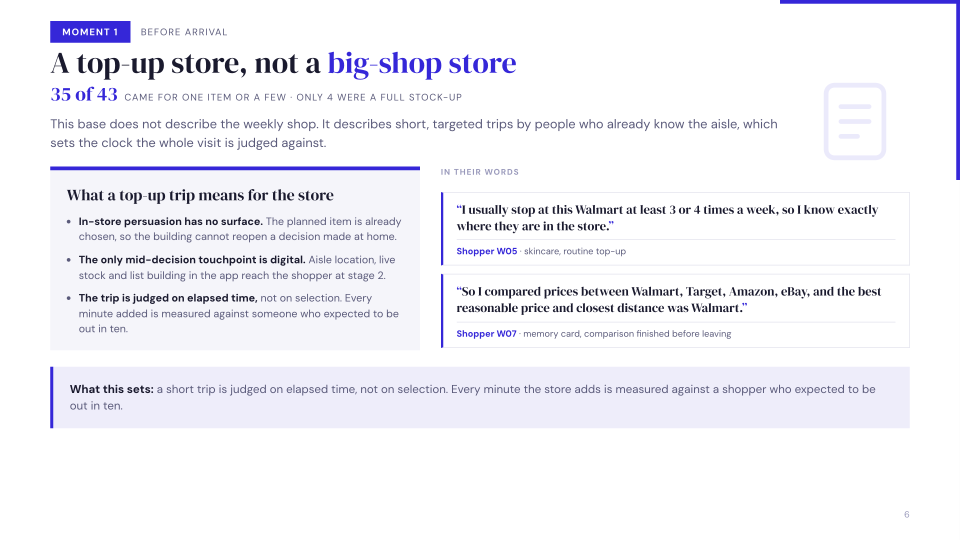
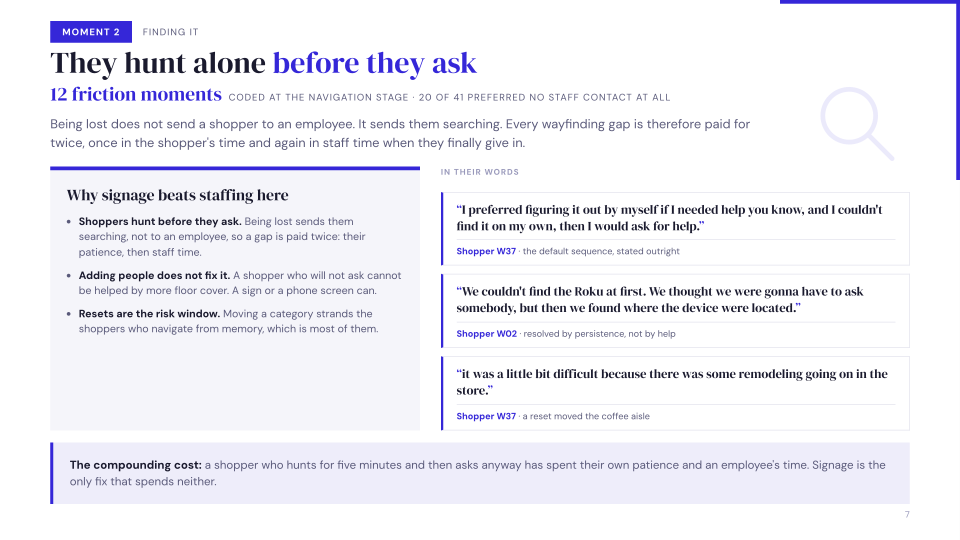
Explore calls and a sample presentation from our 43-participant Walmart shopper study.
Grocery top-up, supercenter
“Basically, because we use those things all a lot We try to always have you know, certain things in the house at all times because we use them very frequently. So we don't like to run out of them.”
Hi. I'm Elliot. Your AI moderator. For the next 15 minutes, I'm here to learn. No wrong answers, so don't overthink it. The more detail you share, the better. So how are you doing today?
Good. How are you?
I'm doing well. Thanks for asking. So So recently, you bought something in person at a store. I don't have the store name or what you bought just yet. Could you tell me what you picked up most recently and where?
It was at Walmart. And I just purchased mainly just groceries
Got it. Thanks. So you were at Walmart within the past 30 days and picked up groceries. What made you go grocery shopping that day?
Pretty much just little things that we needed.
Walk me through how this grocery trip came about. Where did it start for you?
When I basically went into my kitchen to make my husband something quick to eat for lunch and noticed that we were out of a couple condiments and we were out of cheese for sandwiches and, uh, you know, little things like that. So I started making a little list and that's basically what made me realize that I needed to do a little quick shopping trip.
That makes sense. When you started making that list, what were you hoping to end up with by the time you got back from Walmart?
I was hoping that I was gonna come back with exactly what I needed and maybe a couple other things due to looking through any coupons that I could get my hands on, or any savings or promotional items that they had going on at store I was going to.
What was making you want those specific things right then? Beyond just being out? Was it about being able to make certain meals or something else?
Basically, because we use those things all a lot We try to always have you know, certain things in the house at all times because we use them very frequently. So we don't like to run out of them.
Why Walmart for this trip and not another grocery store? What made it the right choice for you that day?
On Walmart, is basic to us, it's just kinda quicker and it it has everything that we need plus more. We do go to a couple other things or other places. We actually shop online a lot, but if we are going store anywhere, we usually do pick Walmart. Just simply because, like I just said, Walmart usually always has everything we need plus more. It's kind of like a 1 stop shop for us
Take me into your trip. What's the first thing you did when you got to Walmart?
The first thing that I did when I got to Walmart was I made sure that I had my shopping list in hand And then I grabbed a shopping cart because I knew I was going to need it. I always end up grabbing end up walking out with more than I can getting. But I always start with going on 1 side of the store. And ending up on the other side. I like to kind of go aisle to aisle. I don't really shop sporadically throughout the store.
As you went aisle to aisle, what were you looking for along the way? Was it just the list, or were you keeping an eye out for anything else?
That's why I go aisle to aisle on Obviously, I always get what is on my list. I always I always keep an eye out for anything else that we could you know, need in the household or if I always look for sales and promotions mainly. But I always make sure that I have the list in my cart before I you know, choose anything else
How do you usually spot those sales or promotions while you're shopping? Is there something you look for, or do you wait for things to catch your eye?
I usually go online and look throughout I either look on the website first or I if they have a if they have a a coupon book I will grab that and I'll look I'll look through that as I'm browsing a store. I try not to rush That way I can actually see everything.
Did you end up dealing with anyone who works at Walmart during this trip, or were you on your own the whole time?
No. I was pretty much on my own. The whole time for this trip. I don't really like dealing with employees there. I like to kinda be on my own.
Was there a moment during this trip that stood out to you even if it was something small?
Not that I can really think of right this second.
No worries.
Just that it it it's always busy.
Got it. Was the busyness something that got in your way at all, or did it just feel like part of the usual Walmart experience?
Definitely just part of the Walmart experience. It's always like the Again, that's usually why we shop online a lot. But in certain circumstances, if we need it faster, we will go in store.
Of everything about that purchase, what mattered most to you?
Basically, the pricing the prices and getting it that day.
What was it about the pricing and getting it that day that made those things matter most to you?
All of the above. I mean, quality of the product and getting it I mean, getting it that day.
If you could change 1 thing about trip to Walmart, what would have made it better for you?
If I could change 1 thing about that trip, I would say if the store wasn't as busy so the lines weren't as long and I could get out faster.
Would you buy from Walmart again for groceries?
Yes. Definitely.
Would you tell a friend to buy their groceries at Walmart? If so, what would you say to them?
Yes. I would, but I would tell them to shop online.
What would make you recommend shopping online at Walmart instead of going in
How busy it was in store. And you get free delivery if you're a member.
Is there anything else about your grocery shopping trip or how you decide where to shop that you think I should know?
I like 1 1 stop shops. So, I mean, I mainly look at what I need and I compare pricing mostly. But mainly Walmart is a go to.
That's all I had for you today.
You for your time. You can hang up when you're ready.
Phone replacement, unplanned and urgent
“It made me feel so safe so relieved, and it brightened my day.”
Hi. I'm Elliot. Your AI moderator. For the next 15 minutes, I'm here to learn. No wrong answers, so don't overthink it. The more detail you share, the better. So how are you doing today?
I'm doing great. Thank you so much.
Glad to hear it. Let's jump in! So, within the past 30 days, you bought something in person at a store. I wanna make sure I've got this right. Can you tell me what you picked up and where you bought it?
I bought an an mobile phone at the Walmart shop.
Perfect. Thanks for clarifying. So you were at Walmart and picked up a mobile phone. What made you go looking for a new phone that day?
My old phone was broken, so I had difficulties to communicate and to chat on various social media platforms. So I decided to to get new phone.
Got it. So really started because your old phone broke and you needed to get back to communicating and using social media. Walk me through how it all began. What were you doing right before you decided to head out to Walmart for a new phone?
So I was in the kitchen preparing some meals. And usually, when I see new recipes online, I like to try them out, especially learning on YouTube So while I was watching the tutorials, online, and in the kitchen preparing something, the phone suddenly fell off and broke. And it frustrated me. So next thing, I looked at the nearest Walmart store, and decided decide to get a new phone immediately so that I can I could continue with my my my cooking?
That sounds like a pretty frustrating moment. Right when you needed your phone most. When you decided to go to Walmart, what were you hoping to end up with? It a specific phone in mind or just something that would get you back online quickly?
I was really hoping to to get a phone, a Google a Google phone So I finally got Google Pro 6 and which is very quite helpful because the features are amazing. The camera setting is great. The the volume is so loud, and wow, it just makes me so happy.
Sounds like you knew exactly what you want. A Google Pixel 6 Pro. What was it about that phone that made it the right choice for you, especially in that moment?
Yeah. Thank you. So the the the phone had a lot of features. I I heard friends were talking about this phone. So in terms of the camera setting, it can take pictures and refine them into good quality. It has its own internal scanner, like I don't need to download other apps to scan to do scans. And of course, it has high quality for recording, which has been helping me in my meetings. In the office. So it's really amazing, and I love festival the quality of the phone in terms of the camera, because the previous phone I had was a Samsung. And the quality was really frustrating. And it had it has a very good processor speed as well. It's very fast. It's very efficient, and I like it. I like it. I'm enjoying the features.
You mentioned your friends talked about it and the camera and speed were big draws. Especially since your old Samsung left you frustrated. Why did you choose Walmart for this purchase instead of another store or buying online? What pulled you there?
I choose war Walmart because it was approximate to my to my location. So I needed to to to get a new phone ASAP. I could access phones in other store but Walmart was nearest to me. And of course, Walmart is big. The The staff are are very nice. And they have excellent customer care service.
So speed and convenience were key, plus you trust the staff and the service at Walmart. Take me into the experience itself. When you walked in, what was the first thing you did?
When I walked into the shop, the first thing I I did was to try to seek for help. By by calling the attention of the staff who were in attendance, Mostly in other shops, I get frustrated because many staff sometimes they're standing and they are doing nothing and they are busy and they're snobbish. But the staffs were very nice, and they paid attention. And someone quickly rushed over to my aid, to direct me to the section where I could easily purchase a mobile phone. And that really made made my day because I was in the haste. I wanted to get a a new phone as soon as possible to get back to consume my tutorials. Online.
That sounds like a real relief. Especially since you were in a hurry. When the staff member helped you
Yeah.
what happened in that exchange that stood out to you?
When she helped me, she pointed me in the direction of where we have mobile phones and other accessories because they have several lanes, they have lanes for fresh food, for fast food, for household equipment, for TVs, and for computers, They just pointed me out to to the direction of or where I could get mobile phones. Otherwise, I would have spent more than 30 minutes wandering from 1 place to the other, and add in addition to this, I'm new to the area. So the experience really saved me time which was of the essence to me because I really wanted to get back to my cooking in the kitchen.
That makes a lot of sense. So having someone guide you right away, especially as someone new to the area, really made a difference. Was there a particular moment during your visit that stood out and shaped how you felt about the whole experience?
Let's start with very warm work welcoming, often nice words. And after the point in the direction where I needed to to to look at the mobile phones, the various samples. They pointed me, even gave me a recommendation for the Google Google Pro 6 and the other Google phones. So they didn't they were not just nice, but they took our time to give me different brands. They were patient. That really helps me. So I'm happy for this experience. And I think I'm going to go back to that shop to be able to purchase more equipment or more materials.
It sounds like their patience and willingness to walk you through options really mattered, especially since you were in a rush and new to the What did that leave you feeling in the moment?
It made me feel so safe so relieved, and it brightened my day. Because unlike my previous experience in different stores, which I beg for permission not to mention their names, I felt frustrated better And at the same time, since I'm a black person, I thought honestly, it was a race issue. But keeping my feelings aside, the experience I got from the Worldmart Show was completely different because I felt safe I felt happy, and it made my day because I was able to get back to my cooking in time. Which was something very wonderful.
Thank you for sharing that. Sounds like feeling safe, respected, and genuinely helped really shape your experience at Walmart. Especially compared to what you felt elsewhere. Of everything about that purchase, what mattered most to you?
The 1 thing that mattered most to me was their abilities with patients. To take me on a mini tour for the section where I had to buy the the mobile phone to take time to explain to me the different brands, and the accessories and the properties of each phone, And of course, showing me other lanes of things I could buy, like, oh, if you want to get a flat screen for your home, if you want to get, I mean, household equipment, it was It was like, I mean, a whole package I came there for a mobile phone, but they showed me several things and told me interesting things about quality of their products, And my overall experience is that this same manner that I was treated for buying the mobile phone the same treatment I'm gonna get if I go to buy other things at the store. So that leaves me extremely delighted.
That sounds like a great experience. If you could change 1 thing about that purchase or make it even better, what would it be?
If I could change 1 thing about that purchase, I will probably say they should be able to put up like, digital screens for the sections that has different goods, like mobile phones and accessories, smart TVs, fresh food, household kitchen utensils, I know just different sections for each type of product that they're selling, uh, with digital science on the alley on the alleyway. That works.
That's a really clear suggestion. Digital signs to help people find what they need faster. Would you buy from Walmart again after this experience?
Definitely, of course, I'm going to buy from Walmart. I think when when you've when you when you have money, and you get to a service and you feel respected, that that that that that that is a priceless and a rewarding feeling. So, yes, I'm going to buy from Walmart. The next time.
If a friend asked you about buying a phone from Walmart, what would you tell them?
But tell them that first, they are going to save a lot of time. The the the staff are very warm. Welcoming. And did not discriminate against your color no matter your nationality or your race. And I will tell them, that they will be able to get high quality products as well. Because it does not suffice for you to experience good customer care But I think the quality of the product you're going to purchase also matters. So it's a combination of quality of products plus quality of service.
Thank you for being so open and detailed. Is there anything about your experience at Walmart or buying your phone that we didn't talk about? But you think is important to mention.
Think, uh, they should
Take your time. What else
they should because okay. Thank you. Thank you for giving me the opportunity. I think they should open, like like, a program to help those who are in need like, a secondhand treats, like a secondhand shop where people who cannot afford high quality goods could can afford goods that that are of high quality but are of secondhand.
That's a thoughtful idea. Having a second hand section so more people can access good products at lower Thanks for sharing that. I really appreciate you walking me through your whole experience and all the details. That's everything I needed. Again for your time and openness. I hope the new phone keeps making your days brighter.
Thank you. I got it
That's all I had for you today. Thank you for your time. You can end the interview when you're ready.
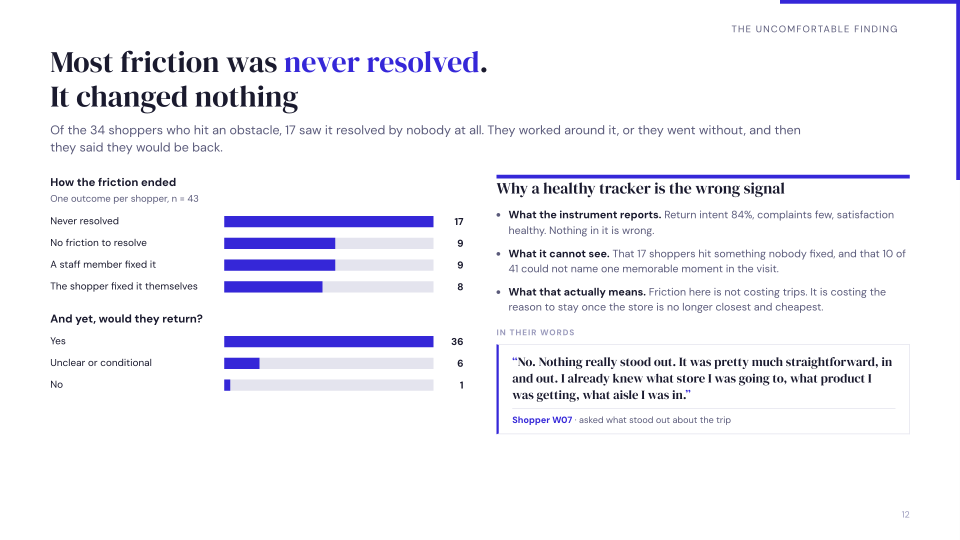
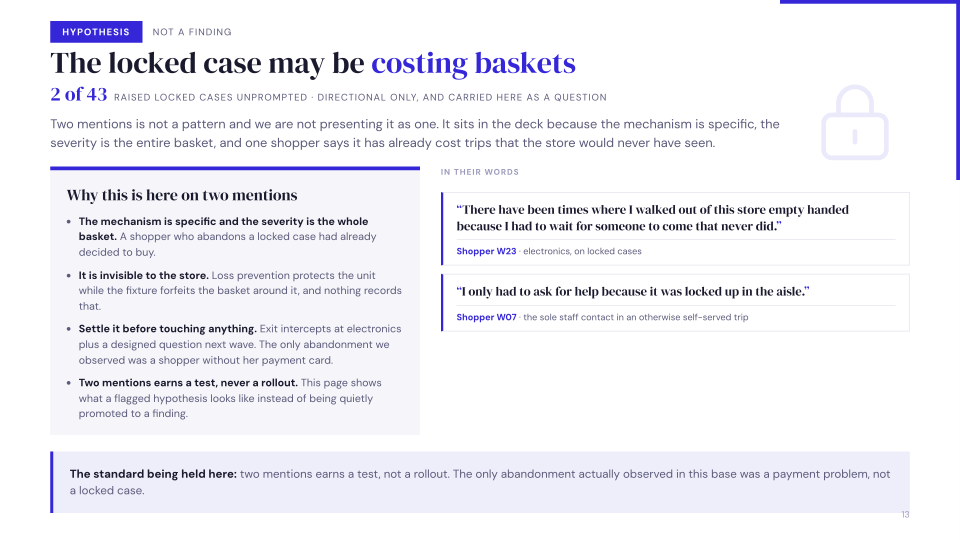
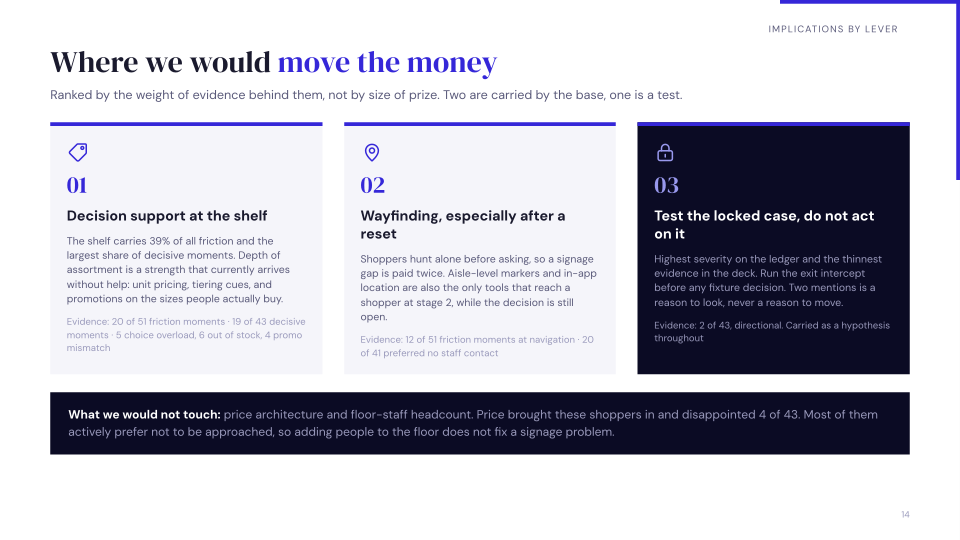
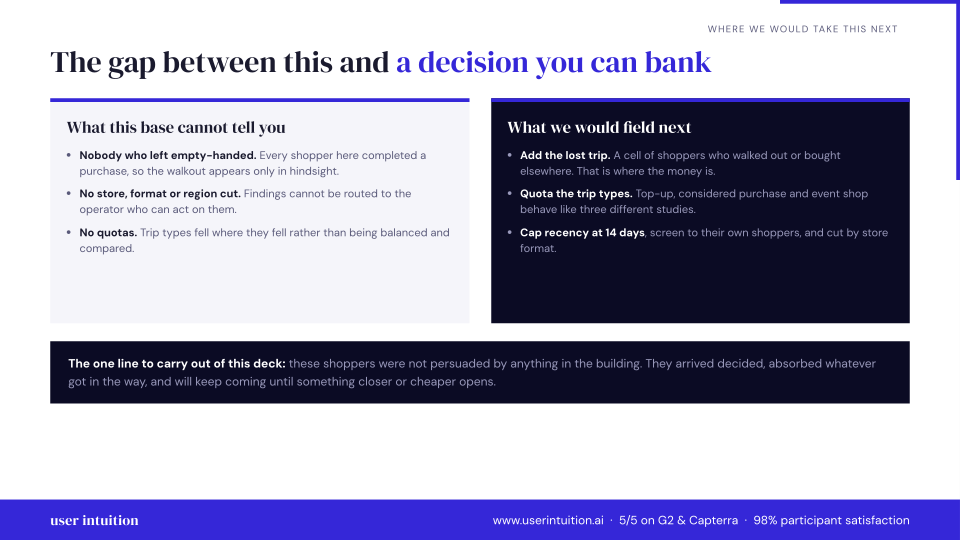
Sample presentation
Explore all 15 slides, from shopper evidence to recommendations.
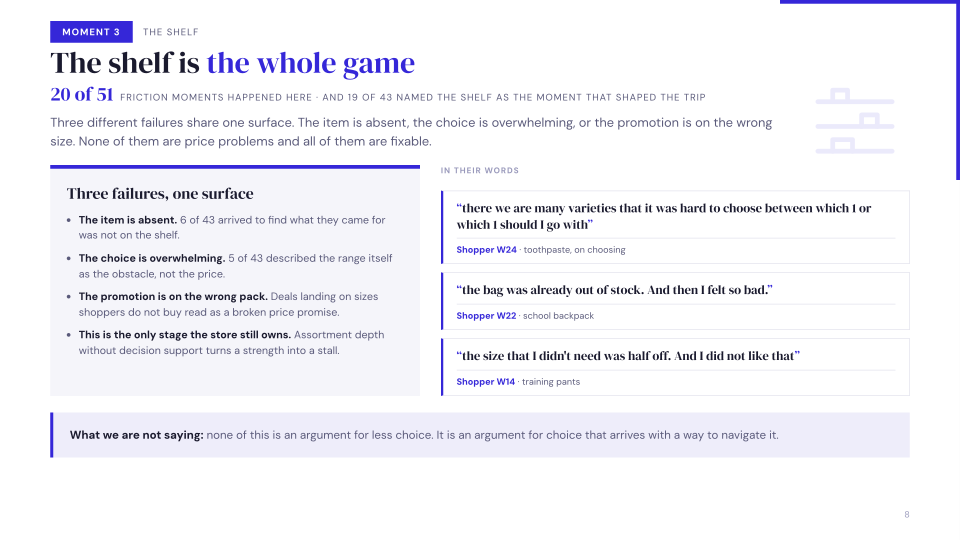
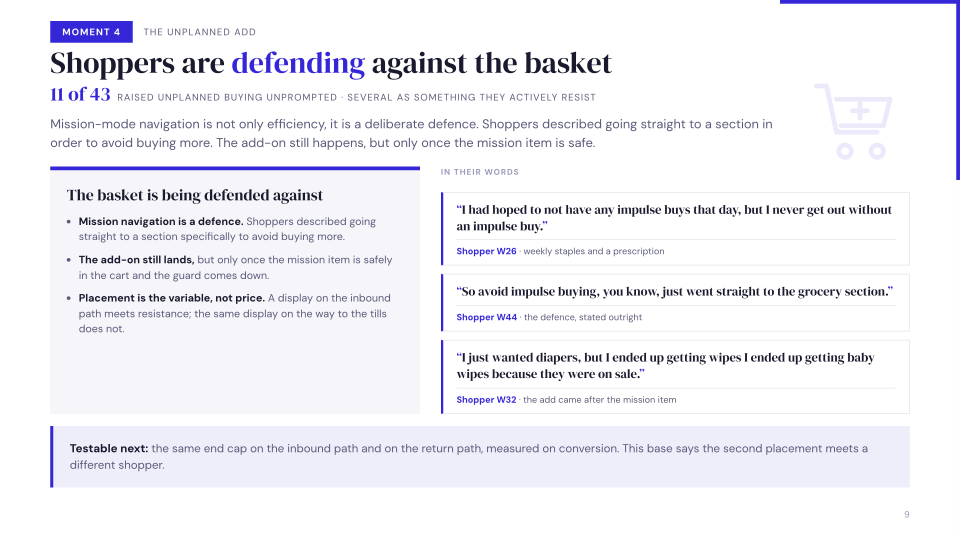
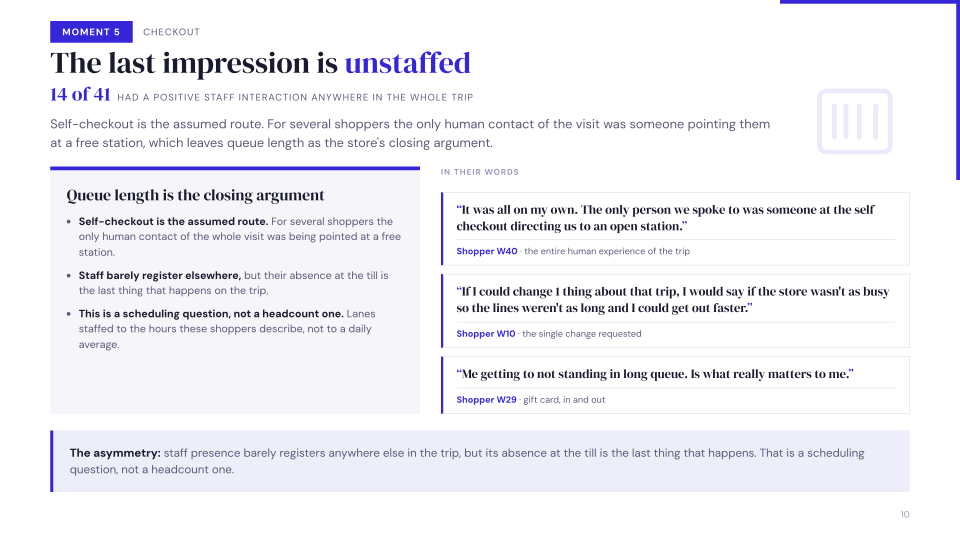
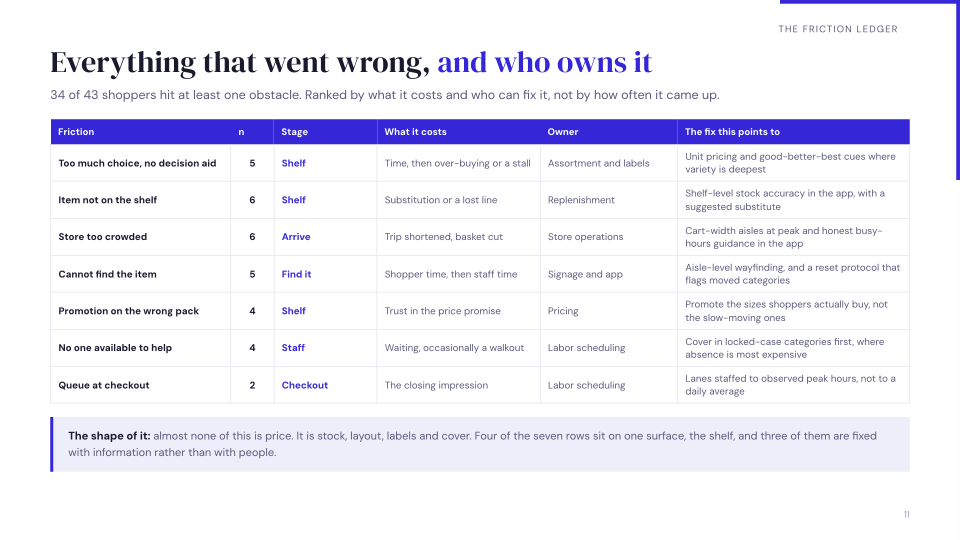
Bring your own sample
$30 per quality voice interview
Use our 4M panel
$60 per quality voice interview
How Consumer Insights Teams use
User Intuition
Brand Health Tracking
Track brand perception, awareness, and consideration continuously with AI-moderated depth interviews instead of shallow tracking surveys.
Concept Testing
Validate concepts, messaging, and packaging with 50-300 consumers in 24 hours. Iterate fast enough to test multiple rounds before launch.
Consumer Insights
Uncover purchase motivations, unmet needs, and decision drivers through 30+ minute AI-moderated conversations that probe 5-7 levels deep.
Competitive Intelligence
Interview competitor customers to understand switching triggers, unmet needs, and perception gaps you can exploit.
Shopper Insights
Map shopper missions, decision hierarchies, and in-store vs. online dynamics through conversational depth research.
Market Intelligence
Build continuous competitive and market intelligence that compounds over time instead of point-in-time snapshots.
How Does User Intuition Compare to Survey Platforms, Research Agencies, and Syndicated Data for Insights Teams?
| Dimension | User Intuition | Survey Platforms (Qualtrics / SurveyMonkey) | Research Agencies | Syndicated Data (Nielsen / Mintel) |
|---|---|---|---|---|
| Depth of Insight | 30+ min · 5-7 laddering levels per consumer | Closed-ended questions, shallow open-ends | Deep but limited to 15-30 interviews per project | Category-level trends, no custom depth |
| Time to Insights | 24 hours from brief to structured findings | 1-2 weeks for fielding + analysis | 6-12 weeks from RFP to final report | Monthly or quarterly data releases |
| Cost per Study | Starter: $30/call BYO; $60 with standard panel recruitment | $5K-$20K per wave depending on sample | $25K-$75K per project | $50K-$200K/year subscription |
| Scale | 50-1,000+ depth interviews per week | High volume, low depth per response | 8-12 per focus group, limited by moderator | Broad market data, no individual depth |
| Cross-Study Synthesis | Built-in · query across all past research instantly | Separate datasets per survey, no synthesis | Decks in shared drives, manual review | Pre-packaged reports, no custom queries |
| Institutional Knowledge | Permanent searchable intelligence hub | Data silos per project | Knowledge walks out with the researcher | Subscriptions expire, data access ends |
| Language Coverage | 80+ languages, same methodology | Translation needed for each market | Requires local partners per market | Coverage varies by region and category |
| Customization | Fully custom studies launched in 5 minutes | Custom survey design required | Custom but slow — weeks of scoping | Pre-defined categories, limited customization |
How does User Intuition compare to other AI-moderated interview tools?
Easier setup
Brief in, study live in five minutes. No discovery workshop, no kickoff cadence. Competitors typically require a 30–60 minute onboarding call.
Faster fieldwork
User Intuition owns a 4M+ verified panel for consumer and broad-buyer audiences, and recruits specialty and B2B audiences to order. Competitors lean on third-party recruiters or make you bring your own.
Deeper insights
Adaptive 5–7 level laddering on every response — the same probing technique a senior qualitative researcher uses. Most AI moderators stop at one or two follow-ups before moving on.
Lower risk
Every interview is auto-scored against your brief on length, depth, and coverage. Conversations that miss the bar aren't charged. No refund request required, no manual review.
From brief to boardroom-ready insights
Brief Your Study
Define your research objectives, target audience, and key questions. Our AI builds the discussion guide and screener — no RFP, no vendor onboarding, no 3-week scoping process.
AI Conducts the Interviews
Each participant completes a 10-20 minute AI-moderated voice interview. The AI probes 5-7 levels deep on motivations, perceptions, and decision drivers — not surface-level reactions.
Intelligence Synthesizes
Receive structured findings with evidence-traced insights, segment breakdowns, and verbatim quotes. Every finding links back to the actual consumer conversation that generated it.
Knowledge Compounds
Every study feeds your searchable intelligence hub. Cross-study patterns emerge automatically. New team members query past research instead of starting from scratch. Your insights function gets smarter with every study.
"That shift from research as a project to research as a habit is what actually matters. The cumulative picture you build is way more valuable than any single study — every new study builds on what you already know."
 Eric O., Chief Commercial Officer, Turning Point Brands
 "Collapsed our stack without giving up interview depth, which was the fear. Recruiting, conversations, and the archive live in one place now. Brand questions get answered from what we already know instead of another fielding cycle."
When Should You Use AI-Moderated Interviews for Insights Research — and When Shouldn't You?
AI-moderated interviews deliver scalable consumer understanding for the research that drives most business decisions. Human moderation adds value in exploratory and sensory contexts.
AI-Moderated Interviews Are Best For
- Scalable consumer research across segments and markets
- Continuous brand and category tracking programs
- Multi-concept and multi-message testing at speed
- Cross-study pattern recognition and synthesis
- Building permanent institutional knowledge bases
- Consistent methodology across 80+ languages
Consider Other Methods When
- Ethnographic and in-context observation research
- Sensitive topics requiring high emotional intelligence
- Executive stakeholder workshops and alignment sessions
- Early-stage exploratory research with undefined hypotheses
- Physical product interaction and sensory evaluation
- Co-creation sessions requiring real-time facilitation
N=3,420 AI-moderated consumer interviews on User Intuition (2024-2026), using 5-7 level laddering (Gutman 1982). Best for 80% of consumer research; reserve human moderation for ethnographic and early-stage exploratory work.
Build an insights function that
gets smarter every quarter
Start with a live research question. Review the calls and findings, then build on the evidence in your next study.
Start with an editable research brief. Review your plan and discussion guide before inviting participants.
See how leading insights teams are building compounding intelligence. We'll design a program tailored to your research cadence.
Your methodology · Your sample · No monthly fee on Starter
Common questions
Go deeper on Consumer Insights Teams
Pillar Guides
Deep-dive guides covering this topic from strategy to execution.
Tools & Tactics
Practical frameworks and platform-specific guides for teams ready to act.
Reference Guides
Reference deep-dives on methodology, best practices, and applied research.
Alternatives & Comparisons
Side-by-side comparisons with competing platforms and approaches.
Platform Capabilities
The platform features that power this type of research.
Last updated