.svg)
Features
User Intuition + Zapier: Connecting Voice Interviews to 8,000+ Apps
User Intuition's Zapier integration connects AI-powered voice interviews to more than 8,000 business applications.
Why product teams interview only 15 users before major decisions, and how AI research eliminates the depth-scale tradeoff.
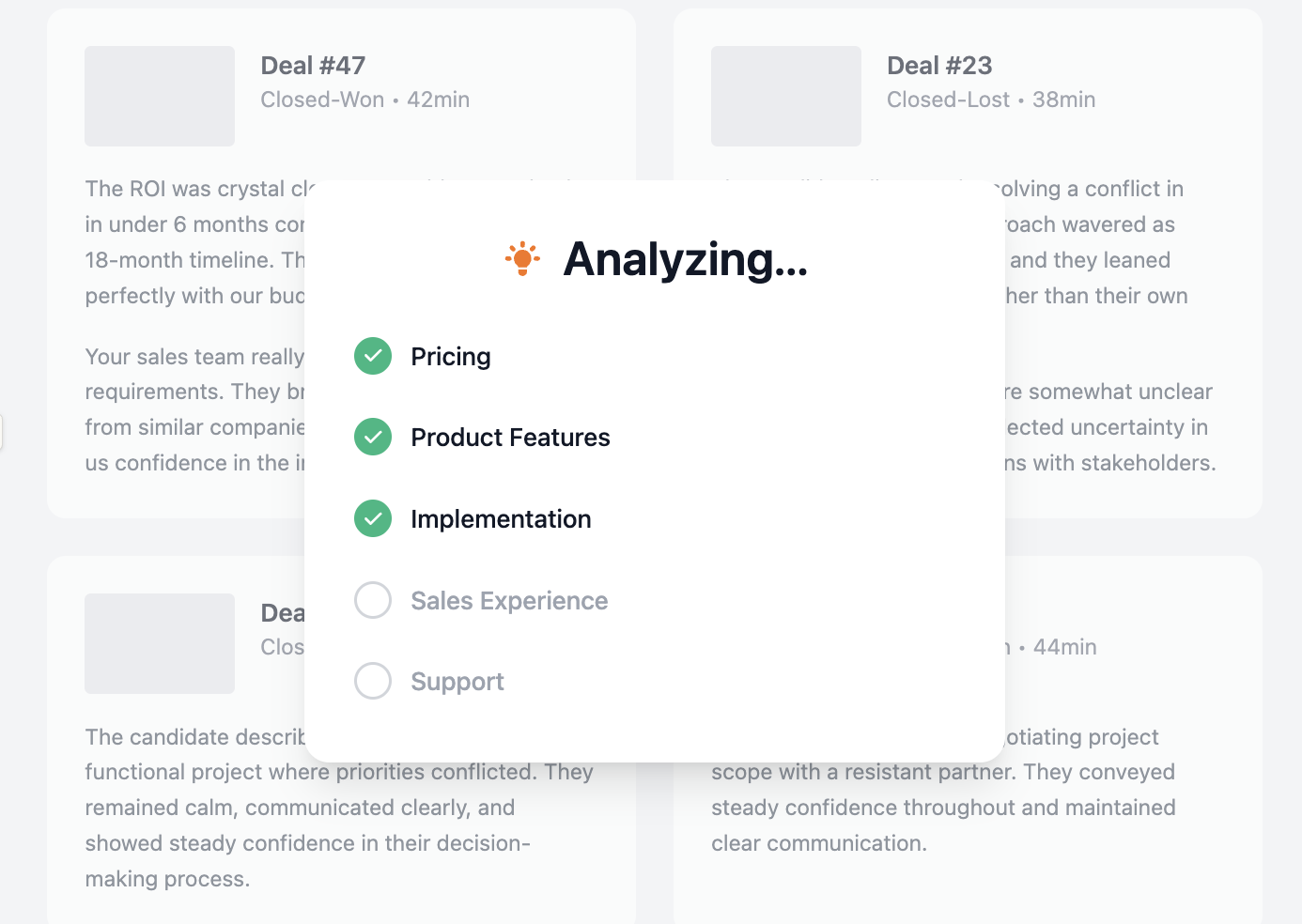
The average product team interviews fewer than fifteen users before making major feature decisions. This number has remained stubbornly low for decades, not because teams don't value user input, but because traditional qualitative research imposes constraints that make broader participation economically impractical. When each in-depth interview requires scheduling coordination, moderator time, transcription, and analysis, the math simply doesn't work for most product development cycles.
Yet the irony is unmistakable. As product development has accelerated toward continuous deployment and rapid iteration, the research methods meant to inform those decisions have barely evolved since the 1990s. Teams operating in two-week sprints still rely on research processes designed for quarterly release cycles. The result is a widening gap between what product teams need to know and what they can realistically learn within their development timelines.
The emergence of AI-powered qualitative research represents more than incremental improvement. It fundamentally restructures the economics and logistics of user understanding, enabling product teams to conduct the kind of deep, exploratory conversations that reveal genuine user motivations while operating at scales previously reserved for quantitative surveys.
Understanding why users behave as they do requires a fundamentally different approach than measuring what they do. Quantitative methods excel at identifying patterns and measuring frequencies, but they struggle to reveal the underlying reasoning, emotional responses, and contextual factors that drive user decisions. A survey can tell you that 34% of users abandon your onboarding flow at step three. It cannot tell you whether they abandoned because they were confused, frustrated, distracted, or simply unconvinced of the value proposition.
Traditional qualitative methods were designed to fill this gap. Focus groups, in-depth interviews, and contextual inquiries allow researchers to explore the "why" behind user behavior through dialogue, follow-up questions, and observation. The problem is not their effectiveness but their scalability. A skilled moderator can conduct perhaps four to six quality interviews in a day. Factor in recruitment, scheduling, and analysis, and a typical qualitative study takes four to eight weeks from conception to actionable findings.
This timeline creates impossible tradeoffs for product teams. They can either make decisions quickly with insufficient user input, or they can delay decisions to gather proper insights. Neither option serves users or businesses well. The former leads to products built on assumptions rather than understanding. The latter means competitors reach market first while teams wait for research readiness.
The methodological sophistication required for effective qualitative research compounds these challenges. Techniques like laddering, which involves asking progressively deeper "why" questions to uncover unconscious motivations, require skilled facilitation. Projective techniques, which help participants articulate feelings they struggle to express directly, demand experience and intuition. These capabilities have traditionally required trained researchers with years of practice, creating bottlenecks that prevent product teams from accessing the depth of insight these methods can provide.
Artificial intelligence does not simply automate existing interview processes. It restructures the fundamental economics of qualitative research by eliminating the linear relationship between interview volume and human effort. When an AI interviewer can conduct conversations simultaneously across hundreds of participants, the cost per interview drops from hundreds of dollars to single digits. When those conversations can begin within hours of study design rather than weeks, the timeline compression enables research to fit within sprint cycles rather than requiring separate planning horizons.
These economic changes enable qualitative research to operate at scales that were previously the exclusive domain of quantitative methods. A product team can now interview 300 users about their experience with a new feature rather than settling for twelve. They can segment those conversations by user type, use case, or behavior pattern and still maintain statistical confidence in their findings. The traditional tradeoff between depth and breadth dissolves when AI handles the conversation mechanics.
The quality implications are equally significant. Research on interviewer effects has consistently shown that human moderators, despite their best efforts, introduce subtle biases through their reactions, follow-up choices, and conversational patterns. Participants adjust their responses based on perceived moderator expectations, social desirability concerns, and group dynamics in focus group settings. AI interviewers eliminate many of these effects. Participants report feeling less judged and more willing to share critical feedback, with studies showing 40% more candid responses compared to human-moderated sessions.
The participant experience data supports this observation. User Intuition reports 98% participant satisfaction rates, with users describing conversations as their best research experience. This level of engagement matters because it directly affects data quality. Participants who feel comfortable and respected share more, elaborate more, and provide more useful context than those who feel evaluated or rushed.
The landscape of user research tools has expanded considerably, but different solutions address different parts of the research challenge. Understanding where each approach excels helps product teams construct research programs that leverage the right methods for their specific needs.
Traditional focus groups and in-depth interviews conducted through market research agencies remain valuable for certain use cases. When exploratory research requires real-time moderator judgment about which threads to pursue, or when the research topic demands the kind of rapport that develops over extended interaction, human-led qualitative research still offers advantages. However, these methods typically yield insights from small samples, often eight to twelve participants per focus group, with costs that restrict how many sessions teams can afford. Group dynamics can also suppress minority viewpoints and create conformity pressure that masks genuine diversity of opinion.
Mass survey platforms like Qualtrics and SurveyMonkey solve the scale problem but sacrifice depth. They can reach thousands of users quickly and affordably, making them essential for measurement and tracking. However, surveys cannot probe unexpected responses, explore emotional nuances, or follow the conversational threads that reveal underlying motivations. The open-ended text responses that surveys collect rarely provide the context needed to understand why users feel as they do. These tools excel at quantifying what users report but struggle with the exploratory work that uncovers what users actually mean.
User experience research platforms like UserTesting and UserZoom occupy a middle ground, enabling teams to observe users interacting with products while capturing their verbal feedback. These tools prove valuable for usability evaluation and concept testing, particularly when visual feedback matters. However, they were designed for task-based evaluation rather than exploratory understanding of broader user needs and motivations. The manual effort required to review recordings limits how many sessions teams can practically analyze, and the format constrains the kinds of questions researchers can explore.
Voice of customer platforms like Medallia and InMoment aggregate feedback across touchpoints and provide dashboards for tracking satisfaction metrics. They excel at identifying where problems exist through metrics like NPS and CSAT. However, they typically cannot explain why those problems exist because they lack the conversational capability to explore issues in depth. A declining satisfaction score signals something has changed, but understanding what changed and why requires the kind of dialogue these platforms do not facilitate.
AI-powered conversational research platforms like User Intuition represent a distinct category. They conduct genuine qualitative conversations with the methodological sophistication of trained researchers while operating at quantitative scale. The AI interviewer can employ laddering techniques to uncover unconscious motivations, adjust questioning based on participant responses, and probe emotional reactions with appropriate sensitivity. Unlike surveys, these conversations are bidirectional and adaptive. Unlike traditional qualitative research, they can happen simultaneously across hundreds of participants without proportional increases in cost or time.
Successful integration of AI-powered research into product development requires thoughtful consideration of where conversational insight adds the most value. Not every research question benefits from qualitative depth, and not every qualitative question requires the scale that AI enables.
Discovery research, where teams seek to understand unmet needs and opportunity spaces, represents an ideal application. Traditional discovery often relies on small numbers of interviews that may not represent the diversity of user perspectives. AI-enabled research can explore needs across user segments, geographies, and use cases simultaneously, revealing patterns that small samples miss while preserving the narrative richness that quantitative methods cannot capture.
Concept validation becomes more robust when teams can gather qualitative feedback from hundreds of potential users rather than handfuls. The depth of understanding about why concepts resonate or fail, combined with the breadth to identify segment-specific reactions, enables more confident decisions about which directions to pursue.
Feature prioritization benefits from understanding not just what users want but why they want it and how urgently. AI conversations can explore the context around feature requests, revealing whether expressed desires reflect genuine needs or surface-level reactions. This understanding helps teams distinguish between features users think they want and features that will actually improve their experience.
Post-launch learning accelerates when teams can quickly gather rich feedback about how users experience new features in real contexts. Rather than waiting for usage metrics to reveal problems, teams can proactively understand user reactions and identify issues while fixes remain straightforward.
The integration pattern that proves most effective treats AI research as a complement to existing methods rather than a replacement. Quantitative data identifies what is happening and how often. AI-powered qualitative research explains why it happens and what it means to users. Human-led research addresses questions requiring extended rapport or real-time methodological adaptation. Each method contributes distinct value that the others cannot replicate.
Adopting AI-powered research changes more than methodology. It shifts who can conduct research, how research informs decisions, and what becoming a truly user-centric organization requires.
When research no longer requires specialized facilitation skills or weeks of lead time, product managers, designers, and engineers can incorporate user conversations into their regular workflows. This democratization does not eliminate the need for research expertise. Rather, it elevates that expertise toward study design, analysis strategy, and organizational learning while removing the bottleneck of moderator availability.
The intelligence that accumulates from continuous research creates an organizational asset that grows more valuable over time. Unlike traditional research, where insights live in presentations and memories that fade with employee turnover, AI-enabled research can build searchable repositories of user understanding. Teams can query what users have said about particular topics, track how attitudes evolve, and build on previous findings rather than starting fresh with each study.
Perhaps most significantly, the speed and accessibility of AI research enables the kind of iterative learning that agile development promises but rarely achieves. When teams can gather substantive user feedback within days rather than months, they can validate assumptions before committing resources, adjust directions based on early signals, and develop genuine confidence that their work serves real user needs.
AI-powered conversational research often surfaces deeper insights than focus groups because it eliminates group dynamics that suppress honest feedback. In focus group settings, participants frequently conform to dominant opinions, hesitate to share critical views, and perform for perceived social expectations. One-on-one AI conversations remove these pressures, allowing participants to share authentically. Research indicates participants provide 40% more candid feedback to AI interviewers than to human moderators. Additionally, AI can employ sophisticated probing techniques like laddering consistently across all interviews, ensuring methodological rigor that varies with human moderator skill and attention.
Modern AI interviewers are designed specifically to employ the probing techniques that trained qualitative researchers use. Laddering, which involves asking progressively deeper "why" questions to move from surface preferences to underlying values, is a standard capability. The AI can recognize when responses indicate unexplored emotional territory and adjust questioning accordingly. While AI cannot replicate every aspect of human intuition, the consistency of its probing and the comfort participants report often yield more consistent depth than human moderation provides across multiple interviews.
The appropriate sample size depends on research objectives and population diversity. For exploratory research seeking to understand a relatively homogeneous user base, 30 to 50 conversations often reveal the major themes and motivations. For research across diverse segments or use cases, 100 to 300 conversations provide both depth and statistical confidence in segment-level patterns. The economic advantage of AI research is that increasing sample size incurs minimal marginal cost, so teams can afford to gather more perspectives than traditional methods would allow.
AI-powered research excels when teams need qualitative depth at scale, rapid turnaround, or consistent methodology across many participants. Traditional human-led research remains valuable when research requires extended rapport development, real-time methodological adaptation to unexpected directions, or situations where physical presence and observation matter. Many teams find the optimal approach combines methods, using AI research for broad exploration and validation while reserving human-led research for highly sensitive topics or situations requiring exceptional interviewer judgment.
The shift from traditional to AI-powered research changes required skills from moderation toward study design and analysis. Teams need the ability to frame research questions clearly, design conversation guides that enable productive exploration, and interpret patterns across many conversations. Research expertise remains valuable for ensuring methodological rigor and extracting maximum insight from data. However, the facilitation skills that previously bottlenecked qualitative research become less critical, allowing broader participation in the research process.